The sound of iron rods clanging and cement mixers churning echoes across Ediba, a rapidly expanding residential frontier in the Lekie Division of Cameroon’s Center Region. To the casual observer, this bustling noise is the beautiful soundtrack of development. It represents new homes, rising infrastructure, and economic progress.
But if you look past the scaffolding and dig just a few inches into the loose, red earth, a much darker story emerges.
”True leadership doesn’t wait for a crowd, massive budgets, or a sea of volunteers,” says Louvier Kindo Tombe, Founder of the Upfront Green Initiative (UGI) and a 2022 One Health Ambassador for Cameroon.
“It simply steps out and takes action right where it matters most.”
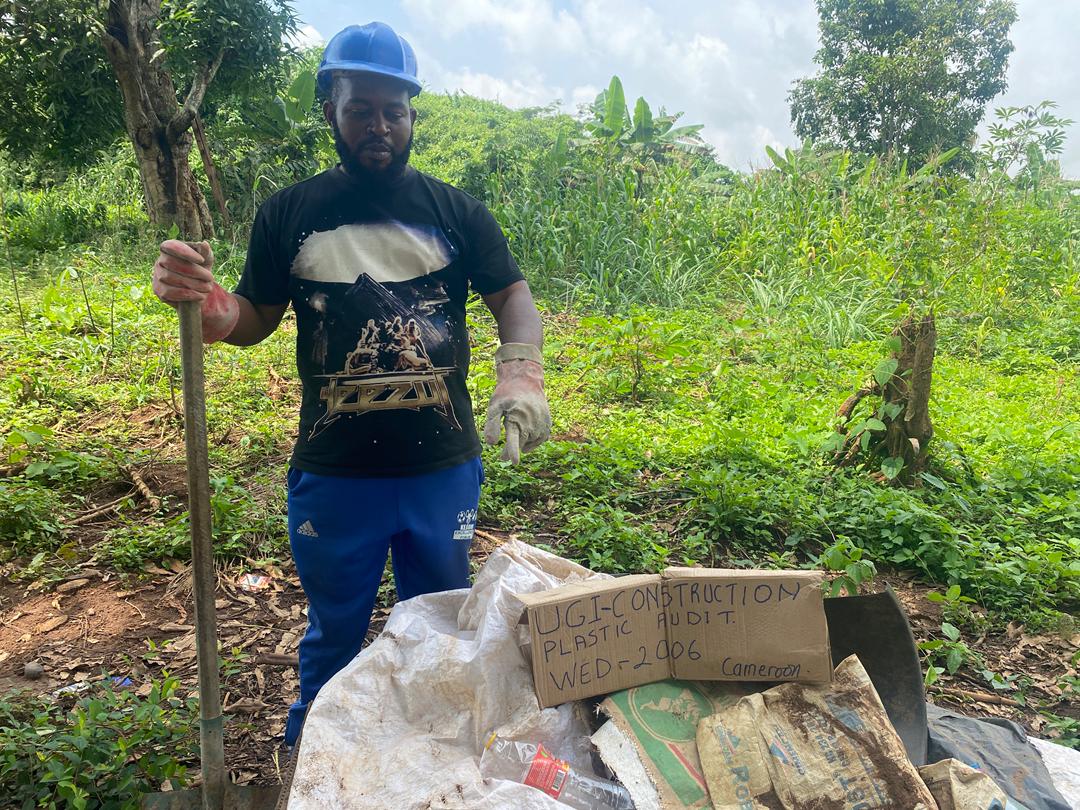
Armed with nothing but a clear mission and a single video camera, Louvier Kindo Tombe bypassed the traditional, ceremonial tree-planting events of World Environment Day 2026. Instead, he and his cameraman deployed directly to the raw, muddy frontlines of Ediba’s active construction sites for a grueling, hands-on Construction Plastic Waste Audit and Sensitization Mission.
Beyond the Concrete: The Invisible Ecological Crisis
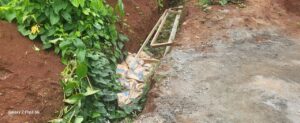
New residential zones are the birthplaces of our future communities, but globally, they are becoming silent hotspots for permanent environmental degradation.
As Cameroon’s urban frontiers expand, a massive volume of unmonitored industrial plastic waste, ranging from heavy-duty chemical jerrycans to torn, multi-layered cement packaging, is routinely discarded on-site. As heavy machinery moves back and forth, this non-biodegradable debris is frequently swallowed by the loose earth, buried beneath the foundations of new homes before the neighborhoods are even fully born.
Left unchecked, this buried plastic chokes soil fertility, permanently disrupts underground water tables, and blocks natural waterways.
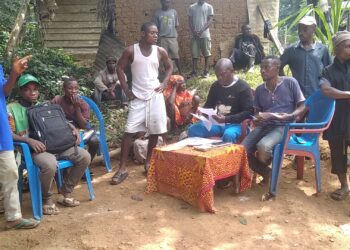
”We didn’t go to these sites to lecture the workers,” Louvier Kindo Tombe explains, recalling his encounters with the site laborers. “We went to connect. We sat down with the men mixing the mortar and handling the brickwork to talk about the Environment and the One Health framework.”
The connection is as simple as it is dangerous: when construction plastic is buried or thrown into roadside ditches, it alters the topography, creating artificial blockages in drainage systems. When the heavy equatorial rains hit Cameroon, these blocked systems turn into stagnant water pools, the primary breeding ground for mosquitoes, directly accelerating localized malaria spikes for the families moving into these homes tomorrow.
Leading Upfront: Putting Hands in the Dirt
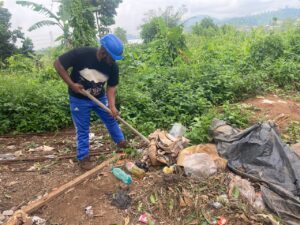
For UGI, environmental journalism must transcend writing headlines; it requires physical accountability.
Following his real-time dialogues with the construction crews, Louvier Kindo Tombe rolled up his sleeves and got to work. He personally navigated the building sites, pulling tightly wedged plastic debris out of the construction soil and stacking it into a centralized, transparent “Trash Audit Pile.”
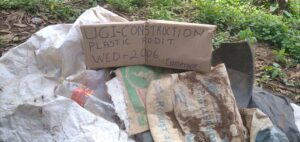
”UGI is built on a very transparent philosophy: to be upfront,” Tombe asserts. “If we want to hold mega-industries, urban developers, and corporate entities accountable for their footprints, we must be willing to put our own hands in the dirt first. This audit is just the initial step in mapping our changing landscapes and defending our climate rights from the ground up.”
By transforming site workers from unintended polluters into active guardians of their workspace, the mission successfully laid a green, community-led precedent for urban development across the region. The blueprint for a sustainable, resilient Cameroon isn’t found in a boardroom policy document, it is being dug out of the earth, one piece of plastic at a time.
Global Alliances for Regional Impact
This grassroots intervention highlights the urgent localized action championed by international and regional environmental watchdogs, including the UN Environment Programme (UNEP), the Food and Agriculture Organization (FAO), the North American Association for Environmental Education (NAAEE), Our Kids’ Climate, and the Environmental Defense Fund.
On a regional scale, UGI’s boots-on-the-ground methodology mirrors the community-first advocacy championed by organizations like Green Development Advocates (GDA), SAILD, JVE-Cameroun, Green Earth Action Foundation, and UNFPA Cameroon, proving that independent, localized environmental audits are vital to securing the climate health of sub-Saharan Africa’s rapidly growing populations.
watch statement of Louvier Kindo Tombe HERE
Watch reaction of labourer HERE
Louvier Kindo Tombe is an investigative journalist, the Lead Reporter at News Upfront, and the Founder of the Upfront Green Initiative (UGI). Follow UGI’s official pages for the upcoming video documentary releases detailing the Ediba Construction Waste Audit.