Story, Louvier Kindo Tombe
”One in four girls in Cameroon becomes pregnant before the age of 18.”
This sobering statistic from the Cameroon Society for Adolescent Health (SOCADO) set the high-stakes backdrop for the 2nd SOCADO Scientific Days, held from May 27–29, 2026, at the Mont Fébé Hotel in Yaoundé.
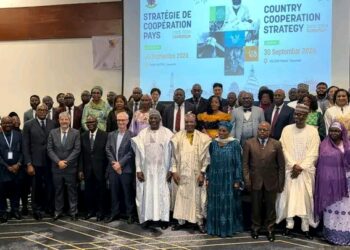
Under the urgent theme, “Adolescent Pregnancy: From Epidemiological Burden to Effective Intervention Strategies,” the three-day congress—backed by technical and financial support from WHO Cameroon and global partners—brought together an elite cadre of clinicians, academics, policymakers, and community advocates.
The message ringed loud and clear: adolescent pregnancy is no longer just a medical issue; it is a complex public health and socio-legal emergency that requires ripping up the old playbook.
Amplifying the Real Experts: The Power of Youth Voices
 A foundational critique echoed by experts and media veterans alike at the congress was the historic exclusion of youth from the very policies designed to protect them. Clinicians and policymakers alone cannot solve this crisis in a vacuum.
For real, systemic change to happen, we must recognize adolescents as the true experts of their own reality.
Drawing from successful community-led models—such as the legacy of youth animators and communication platforms like 100% Jeune—speakers emphasized that storytelling and peer-to-peer communication are not just soft tools, but powerful drivers of behavioral change.
When youth are trained and given the platform to amplify their own voices in sexual and reproductive health (SRH), prevention strategies transform from generic, top-down lectures into relatable, lived truths.
Dismantling the Tensions: A Holistic Approach
To move from an “epidemiological burden” to actual effective interventions, presentations at the congress outlined a comprehensive framework to address the intersecting crises facing young girls.
Adolescents currently find themselves at a chaotic crossroads of competing social, cultural, religious, and legal norms that cloud their decision-making. Compounding this challenge is the rapid expansion of the digital space; while the internet offers unprecedented access to information, its unmonitored landscape has driven a wave of hyper-sexualization, making effective and healthy sexual education harder to navigate than ever.
Simultaneously, the societal stigma cast upon a pregnant adolescent acts as a massive accelerator of gender and economic inequalities. True healthcare must expand to include robust psychosocial support and targeted mental health care for the pregnant young girl, a critical step to directly combatting the rising numbers of youth suicides and hazardous, clandestine abortions.
Furthermore, traditional narratives surrounding teen pregnancy have historically placed the gaze of public judgment almost exclusively on the young girl. Panelists pushed for a radical shift in prevention strategies, arguing that campaigns must heavily include and hold accountable the men who father these pregnancies—a group that currently remains almost entirely invisible in public health discourse.
Finally, experts stressed the danger of treating adolescents as a homogenous group, noting that a girl’s living environment, level of education, and socioeconomic status create radically different vulnerabilities.
Public policy must move away from generic, one-size-fits-all solutions, utilizing regional disaggregation and an understanding of intersectionality to tailor clinical and community responses to specific, localized realities rather than settling for cosmetic fixes.
The Legal and Medical Blindspots: A Call for Structural Reform
 Perhaps the most gripping segments of the scientific days centered on the stark gaps in Cameroon’s judicial and medical frameworks, particularly regarding sexual violence and reproductive rights:
The Incest Loophole: To effectively deter intra-family sexual abuse, experts argued that the law must be strengthened. Specifically, legal systems should eliminate the prerequisite of an official family complaint before a prosecution for incest can begin—a barrier that frequently silences victims under familial pressure.
The Abortion Dilemma: Medical professionals currently navigate a perilous legal tightrope regarding medical abortions following a rape. While a victim requires urgent medical intervention, clinicians are paralyzed by the fact that they cannot legally qualify an infraction as a “rape”—that remains a criminal law determination.
To resolve this critical blindspot, presenters called for an urgent interministerial instruction to establish a clear, interdisciplinary framework protecting both the patient’s reproductive rights and the physician’s professional security.
A Collective Path Forward
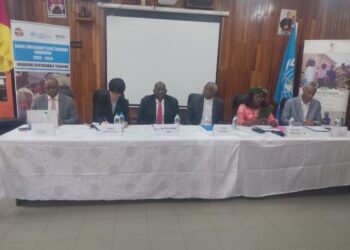
 The 2nd Scientific Days kicked off early on Friday, May 22, with a high-profile Café Presse at the Expanded Programme on Immunization (EPI/PEV) conference hall. Spearheaded by leading medical authorities including Pr Pascal Foumane, Pr Mireille Ndje Ndje, Pr Félix Essiben (SOCADO President), Pr Esther Meka, and Pr Julius Dohbit, the media briefing successfully catalyzed public interest ahead of the main event.
As the three days of intense scientific communication, strategy sharing, and experience mapping at Mont Fébé concluded, the mandate for Cameroon’s public health network became undeniable. Protecting the future of Cameroon’s youth requires breaking legal silences, treating young people as equal stakeholders, and executing precise, localized public actions.
By turning these evidence-based scientific reflections into immediate policy, Cameroon can finally move toward ensuring a healthier, safer, and more equitable horizon for its adolescent population.