Harare
Hop step and wade in foot deep in the slimy liquid is the norm for Mai Tineyi and fellow residents. Raw sewage that ironically used to be a common sight on the streets has made itself a permanent resident in the homes of this satellite town.
The slow dripping sound of the precious liquid trickling from the tap is a very welcome sound as it is rare to have a powerful gush of water coming out from the taps. Most parts of Chitungwiza have not had running water for close to a decade now. The areas which still receive water supply only do so at most once a week.
Improvising is the order of the day as the residents have to adapt to the changing environment, water wells have become a common sight on most homesteads, so as to try and have a reliable water source.
One would wonder of course how the issue of boreholes and wells has become central to water provision in an urban area, more so in this millennium where clean water provision is part of the Sustainable Development Goals (SDG). SDG number six stipulates that there should be clean water and sanitation. Ensuring availability and sustainable management of water and sanitation for all. However, the current state of water provision in Chitungwiza casts a dark shadow on the realisation of this aspiration.
The gender aspect of equitable access to safe and affordable drinking water for all is also under the spotlight in this town. The universal objective to achieve access to adequate and equitable sanitation and hygiene for all and end open defecation, paying special attention to the needs of women and girls and those in vulnerable situations remains a pipe dream.
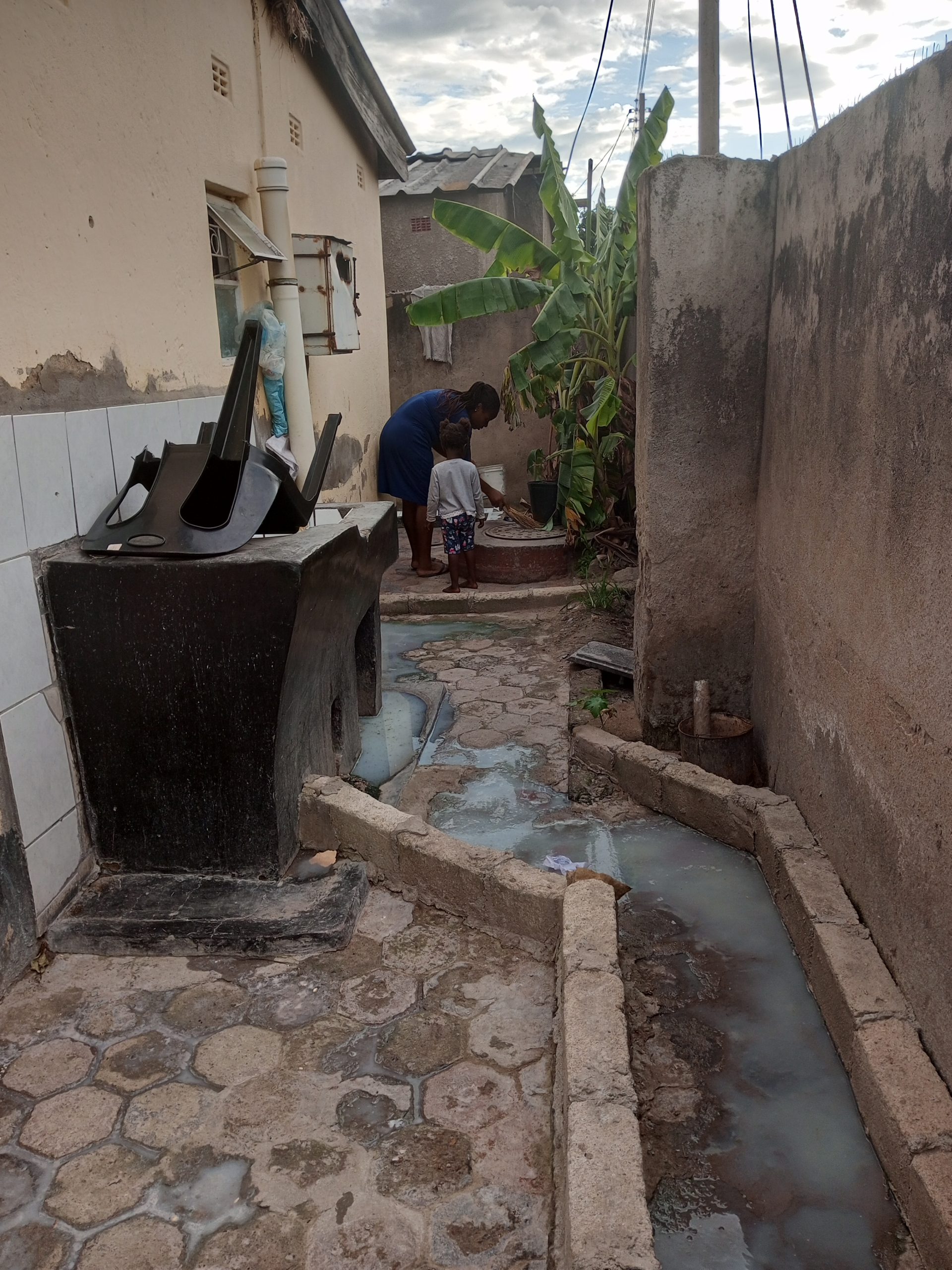
Mai Tineyi was ecstatic when she found lodgings at a house that has well. It meant she will have a reliable water source to cater for her daily needs. But alas, one would wonder why an urban resident is relying on a well as a water source when there is supposed to be council supplied safe water.
“Sourcing for water is a nightmare here in Chitungwiza. I cannot leave the house for long because I am looking after my bedridden mother in law who is suffering from cervical cancer. At least we have a well here. I boil the water sometimes when the pipes continuously burst but with the load shedding at times we drink and use unboiled water” says Mai Tineyi.
Like many other local councils in Zimbabwe, the council of Chitungwiza has been failing to provide running water for its residents and also attending to burst sewer pipes.
Burst sewer pipes and no water is a great recipe for disaster. Zimbabwe has been recording cholera cases nearly every year for example according to data from UNICEF sourced from Relief Web in September 2018 from January to May 2018, 177 cholera cases were recorded in Chitungwiza, Harare and Chegutu, with 12percent of the cases being children.
The worst cholera epidemic in recent memory hit Zimbabwe in 2008 and 2009 left 4,287 dead while 98,585 others were infected in the largest outbreak the country ever experienced according tostatistics published on the World Health Organization website.
Water is life, the unavailability of such impacts negatively on the economy, health and overall well being of a society.
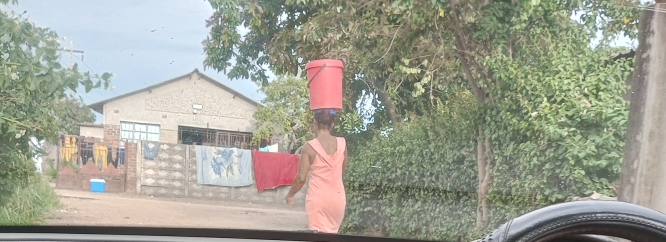
Women bear the brunt to provide water on a daily basis and caring for the sick. The amount of time one has to spend looking for clean water means that other aspects of life suffer. A young mother interviewed says she abandoned fetching clean water from the communal boreholes dotted around the suburbs as she had to spend an average of two hours queuing to get a bucket of water. Constant power cuts are also being experienced in the area and this impacts the availability of supply from the boreholes as they are electrically powered. “We have a borehole close by, but I do not go there anymore, I used to spend a long time in the queue. This delayed the time I have to do my chores at home and cook for my family. I remember one time my husband came back home and I had not yet finished cooking, he slapped me and said I was lazy”.
The water crisis is causing ripple effects including domestic violence. This leaves young mothers like Tabeth Sibanda with no choice but to fetch water from the wells in the homesteads. This act however is posing another health ticking time bomb as raw sewage flows right next to the well. Although the well is somewhat protected, the danger lies with the underground water mixing with the sewerage.
Tabeth shared also how her 23-month- baby constantly suffers from diarrhoea.
Another resident interviewed Carlos Janasi invited us into his home where raw sewerage flows freely. The family has to battle navigating through the overflowing raw sewage in order to access ablution facilities. Janasi says as residents they have tried to engage the council to come and attend to the burst pipes but to no avail as the council bemoans lack of service vehicles. They say the council is also blaming people who were settled on wetlands adjacent to the Unit P section saying their houses are sitting on sewer manholes that act as breathers for the sewer canals.
“We hope that a lasting solution is found soon because we constantly live in fear of contracting water-borne diseases. My wife and sisters have no choice but to mop away the raw effluent using bare hands. We cannot afford to pay medical expenses as they are beyond our reach” Janasi lamented.
The drilling of boreholes by the council and some Non-Governmental Organisations after the 2008-2009 Cholera outbreak came as a relief to the community however the joy seems to be short-lived as several boreholes are in a state of disrepair. The constant power cuts are rendering the boreholes redundant hence the need to provide solar power for pumps and also erect water storage tanks.
A collective effort in urban renewal is critical as old pipes have to be replaced by new ones which have a carrying capacity big enough to sustain the growing numbers of urban dwellers
The non-availability of water in Chitungwiza is a drawback to the realisation of Section 77 (a) of Zimbabwe’s Constitution which states that “every person has the right to safe, clean and potable water”. While women who are key stakeholders in this water issue bear the brunt of this downside, the local authorities of Harare and Chitungwiza have failed to adhere to gender-responsive services that address the needs of women and girls.
Experts contend that the perennial challenge of water in Chitungwiza requires the central authorities to invest in water infrastructure by building dams, such as Kunzvi and Musami, and fixing water supply. This is important to ensure long term solutions to the water calamity.
The 2022 budget statement presented by the Zimbabwean treasury boss Professor Mthuli Ncube acknowledges that “ageing infrastructure coupled with increasing population makes it imperative that we invest in new water supply sources and sewer infrastructure for our urban areas’’. For Chitungwiza the town does not have its own independent water source which compounds its woes. The commitment to invest in new water supply sources is thus the way to go to ensure the town has its own independent water source thereby stopping reliance on the goodwill of Harare local municipality.
Zimbabwean Researcher Catherine Yewedzo Manjengwa proposes interventions on addressing the water crisis in a paper termed, An analysis of the impact of perennial water problems on time and economic affordability for women working outside the home in Chitungwiza, Zimbabwe. “Considering that Chitungwiza depends on council-donor drilled boreholes there is a need for funds to be availed to ensure more water bowsers are in place and more boreholes are drilled. The drilling of more boreholes will ensure that women who work outside their home can easily access water any time of the day and in so doing their household chores as well as their lives, in general, are made easier. Since Chitungwiza’s current people to borehole ratio is very large, the drilling of more boreholes will lessen the number of time women who work outside their home has to spend in search of water. This will enable them to fully maximise their work needs and cut down on the costs that they are currently burdened within ensuring that they provide water to their homes’’, says Manjengwa
Research done in 2020 by Aboelnga and other scholars argued that the provision of reliable water services is key for the sustainable development of cities such as Harare Metropolitan.
Lack of investment in water infrastructure, as well as poor governance and weak institutions, remains major bottlenecks to position water as a basic right. Other scholars in this field such as Bischoff-Mattson and others in 2020 suggested that as a result of the growing concerns about the impacts of climate change and urban population growth, local authorities such as Chitungwiza need to develop strategic plans to ensure sustainable development of water supply systems and resilient services.
A Sustainability-Safety Health Environment and Quality Chief Sustainability Consultant at African Sustainability Consultants Mr Tawanda C. Muzamwese highlighted the need for urban councils to decentralize water supply systems. Harare’s Morton Jeffery’s Water Works plant is currently responsible for water treatment and reticulation and supplies the greater Harare as well as its dormitory towns of Chitungwiza and Norton.
“Another water supply dam is critical to augment when supply from lake Chivero from where the capital city gets its water from.”
Mr Muzamwese stressed the need for households to efficiently use water and adopt recycling initiatives as well as water harvesting at the household level.
For people like Mai Tineyi and Tabeth Sibanda, the provision of adequate clean drinking water will go a long way in improving their quality of life.
This article is part of AWiM/UNEP Africa Environment Journalism Programme