Story, Louvier Kindo Tombe
In the high-walled boardrooms of international finance, “accountability” is often a word found only in the fine print. But in early 2026, Blondel Silenou decided that word belonged somewhere else: in the sun-drenched markets of Kolda and the riverside villages of Ziguinchor.
A Cameroonian expert with a traveler’s spirit and an activist’s heart, Silenou didn’t just bring documents to Senegal; he brought a key to a door most people didn’t know existed. His mission was to hand the Independent Redress Mechanism (IRM) of the Green Climate Fund over to the African communities who live closest to the land and furthest from the power.
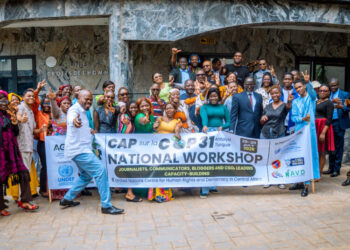
The spark ignited on January 29 at the headquarters of JVE Senegal, where Silenou met ten young pioneers—the “Ambassadors of Redress.” He wasn’t just teaching; he was passing a torch.
The very next day, the prestigious Lycée Lamine Guèye became a theater of justice. Using a game called Road to Redress, Silenou turned a static classroom into a living simulation where students suddenly realized they held a legal right to speak back to the giants of global finance.
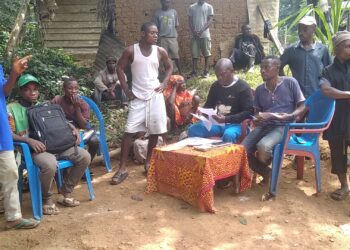
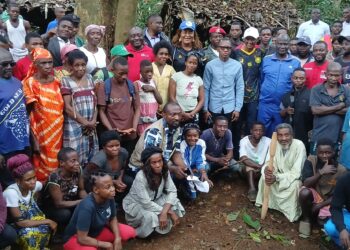
As the caravan rolled south toward the Casamance region, the mission deepened. This wasn’t a tour of logistical convenience; it was a deep dive into the heart of the country. In Kolda, under the heat of the southern sun, Silenou sat with farming women whose lives are dictated by the rhythm of the rain. In Sédhiou, he spoke with youth navigating a landscape already scarred by climate shifts. By the time he reached Ziguinchor, he was meeting with riverside communities whose daily survival is often decided by people thousands of miles away.
Beside him stood Niang Djibril of JVE Senegal, who served as the mission’s cultural compass. As Silenou explained the technicalities of the IRM, Djibril wove the message into local languages, ensuring that when they spoke of “rights,” it landed with the weight of truth. Silenou’s toolkit didn’t contain dense legal binders; instead, he unpacked comic books that visualized the path to justice, practical guides designed for the hands of workers, and visual maps that stripped away technical jargon. His mantra echoed in every village square:
”Communities have the right to know they can complain, be heard, and obtain tangible results.”
Beyond the training and the games, Silenou’s trek was a masterclass in South-South cooperation. It featured a Cameroonian expert and a Senegalese grassroots team—both part of the JVE International network—proving that the continent doesn’t need to wait for outside expertise. They weren’t just sharing information; they were building solidarity.
By the time Silenou prepared for his return to Yaoundé, he wasn’t leaving a void. He was leaving behind a self-sustaining network of informed citizens. Blondel Silenou has returned to Cameroon, but the seeds of his pilgrimage are already beginning to sprout. In every community he touched, there is now an unshakeable conviction:
”Climate justice doesn’t start in a boardroom in a distant capital. It starts on the ground, in the language of the people, with the power to say, ‘We are here, and we must be heard.'”