 Story, Louvier Kindo Tombe
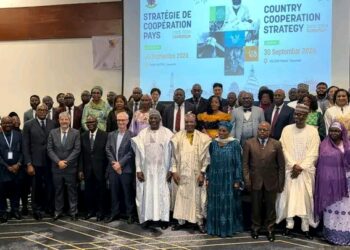
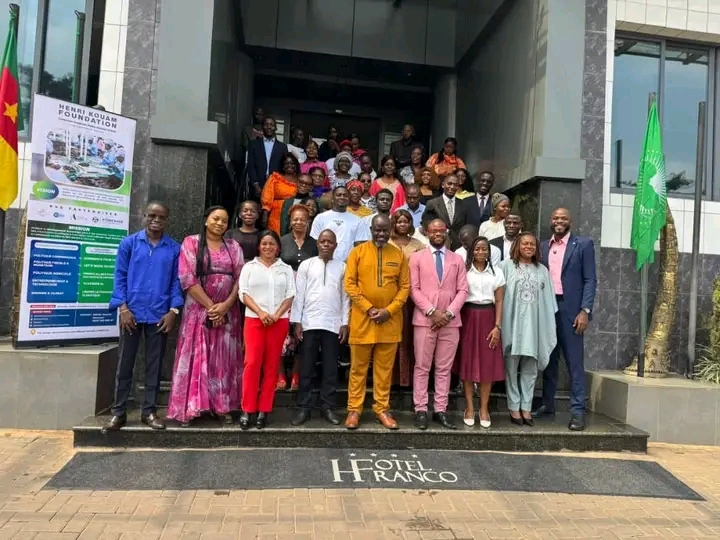
At a recent high-level roundtable in Yaoundé hosted by the Cameroon Economic Policy Institute, trade leaders, government officials, and grassroots founders met to confront a single pressing challenge: turning grand economic promises into practical, everyday freedom for Cameroonian businesses.
Trading Without Shackles: Making Free Markets Work for Cameroon’s Entrepreneurs
When the African Continental Free Trade Area was signed back in 2018, it set off a wave of optimism across the continent. On paper, creating a unified African market offers local producers an unprecedented chance to grow. But as participants gathered at Hotel Franco in Yaoundé for a roundtable hosted by the Cameroon Economic Policy Institute, the overarching mood was one of pragmatic realism.
Executive Director Henri Kouam framed the gathering around a simple truth: policy frameworks create the theoretical market, but ground-level reforms decide who actually gets to trade in it.
Cameroon has already proven that the agreement is more than a dream. Local business GIG Afatex made history by shipping dried safou fruits and ginger straight to Ghana under preferential trade terms. Alongside this milestone, the government has introduced encouraging reforms, such as digitizing portions of customs declarations, harmonizing regional customs codes, cutting value-added taxes on locally produced flour, and lowering import duties on renewable energy tools.
Yet, as the panel of government representatives, private sector experts, and local business owners revealed, the real work of economic liberation is just beginning.
The Grassroots Hurdle: High Costs and Low Awareness
For most small and medium-sized enterprises, navigating continental trade feels like attempting a marathon with tied shoelaces. Paule Sikombe of P&P Fisheries highlighted a persistent blind spot in the current strategy: the massive information gap. Countless micro-entrepreneurs have little to no awareness of how the trade agreement functions, what the complex rules of origin require, or how to navigate standard export paperwork.
Even when entrepreneurs know where they want to go, getting there requires capital—and capital requires formal clearance. In a sharp exchange during the event, a voice from the audience voiced the frustration felt by small-scale producers across the country. Small businesses are urged to industrialize and expand into foreign markets, yet commercial banks demand formal business certifications before extending credit. Meanwhile, the administrative cost of securing those very certifications remains impossibly expensive for a fledgling business.
This creates a frustrating economic trap. The entry requirements for the formal economy were engineered for corporate giants, leaving smaller, innovative creators locked outside the modern financial system. As Wanah Immanuel Bumakor of Amani Transformational Services argued, true trade liberation at the grassroots level requires lowering tax burdens and slashing the bureaucratic red tape that keeps ambitious founders stuck in place.
Clearing the Path for Everyday Trade
If Cameroon is to fully unlock its economic potential, trade policy must adapt to the physical and financial realities of its business owners. Removing tariffs on paper means little if a delivery truck spends days idling on a broken highway or waiting at a sluggish border post.
To fix these structural bottlenecks, the conversation centered on a series of direct, practical solutions. Panelists called on financial institutions to revolutionize how they serve small businesses. Commercial banks and the central bank must adopt alternative credit evaluation tools that do not rely solely on costly certifications.
Additionally, joining regional systems like the Pan-African Payment and Settlement System will allow Cameroonian merchants to trade directly using local currencies, stripping away expensive foreign exchange costs.
Physical connectivity must also keep pace with economic ambition. Repairing and paving crucial national and regional transport roads will physically carry local goods to foreign markets much faster. At the same time, fully digitizing border controls will eliminate human delays, curb informal fees, and speed up clearance times.
The African Continental Free Trade Area has successfully opened the door to a massive new marketplace. The task now facing policymakers, industry leaders, and civil society is ensuring that every Cameroonian entrepreneur—from the rural farm processor to the city tech founder—is given the tools, freedom, and clear path needed to step confidently through it.