Story, Louvier Kindo Tombe
In a quiet room in Yaoundé, conversations about peace were not driven by politics or power, but by people determined to make a difference.
For UNESCO Program Specialist and Head of Sector of Science, Imteyaz Khodabux, the mission was clear from the very beginning: “Peace and security is our mandate, peace is our cornerstone.”
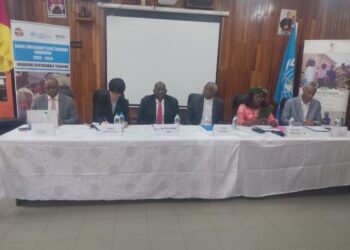
That vision brought together youth leaders, experts, and practitioners for a two day training (26-27 March 2026) designed not just to inform, but to transform.
At the heart of the discussions was a simple but powerful idea: peace must move beyond theory.
“This seminar is going to help especially on how we can use education to secure peace,” Khodabux explained, emphasizing the need to turn knowledge into action.
“Participants should have refreshed their memories on how to bring theoretical questions into concrete actions. They are the experts and we serve as a big umbrella working together to achieve our objectives.”

And that action, organizers say, starts with the participants themselves. According to Jude Atefor, National Programs Manager at Local Youth Corner Cameroon, “This is like a training of trainers… we are expecting participants to amplify the knowledge within their communities, in ways that will benefit the youth. We are working with key sectorial ministries and UN agencies.”

The training, organized by Local Youth Corner Cameroon in partnership with the University of Aberdeen, focused on bridging the gap between ideas and real-life impact.
Dr. Manu Lekunze, Director of Education for Peace and Security Initiative, School of Social Science, University of Aberdeen, United Kingdom, highlighted this connection, noting, “We want to maintain collaboration between practitioners and experts so that you can take what you learn from the field to theory, and vice versa”

“The training centers principally about the different theories that shape our thinking and actions. We expect participants to be able to identify the theories they use on a daily basis.”
Beyond theory and practice, inclusion was also a key message. For Louise Rozès Moscovenko, Democracy Intern at the UN Human Rights Central Africa Regional Office, HQ Yaoundé, peace efforts must reflect reality: “We are here to push the women topic in peace and security. Women are a big part of society and are massive victims… peace and security programs must take this into consideration.”

As the training came to a close and certificates were handed out, expectations remained high. Participants were not just leaving with notes, but with responsibility.
Because in the end, peace is not built in conference rooms alone, it is carried back into communities, where ideas must become action.