Story, Louvier Kindo Tombe
For most, a pilgrimage involves a journey toward the sacred. But for Blondel Silenou, the “sacred” is found in the voices of the unheard.
In early 2026, the Cameroonian expert embarked on a cross-country odyssey through Senegal, not for religious rites, but to perform a different kind of service: bringing the Independent Redress Mechanism (IRM) of the Green Climate Fund directly into the hands of those living on the front lines of a changing planet.
From the bustling streets of Dakar to the lush, remote stretches of Ziguinchor, this wasn’t just a business trip—it was a mission to turn a distant acronym into a living, breathing right.
The journey ignited on January 29 in Dakar. At the headquarters of JVE Senegal, Silenou met his first cohort: ten young ambassadors tasked with carrying the torch of climate justice.
The next day, the halls of Lycée Lamine Guèye transformed. Through a specialized game called The Road to Redress, a dry classroom became a vibrant arena where students learned that “accountability” isn’t just a word for lawyers—it’s a shield for their future.
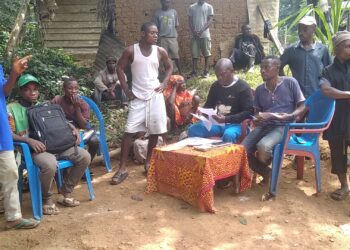
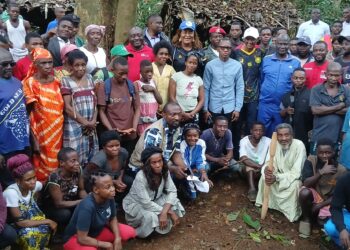
But the heart of the mission lay further south. Silenou and his team pushed deep into the Casamance region, stopping in Kolda, Sédhiou, and finally Ziguinchor.
Breaking the Language of Power
 The greatest barrier to justice is often the language it’s written in. To bridge the gap, Silenou traveled with Niang Djibril, who acted as both a linguistic and cultural bridge. Together, they stripped away the technical jargon of international finance, replacing it with local dialects and shared realities.
Silenou’s “holy relics” were his pedagogical tools:
Comic books that illustrated complex rights.
Visual guides that mapped out the path to a fair hearing.
Interactive games that replaced intimidation with understanding.
At every stop, his message remained a steady drumbeat: “Communities have the right to know they can complain, be heard, and obtain tangible results.”
A Legacy Left in the Dust
As the caravan wound down in mid-February, the “IRM Pilgrim” prepared for his return to Yaoundé. However, the true measure of his success isn’t found in his travel logs, but in the people left behind.
By the time Silenou reached the southern tip of Senegal, he hadn’t just delivered lectures; he had planted a network. Behind every participant is now a better-armed community. Behind every young ambassador stands a dozen more informed citizens.
The pilgrimage proved that while the expert may go home, the movement remains—relay by relay, village by village—until the right to climate redress belongs firmly to the people it was built to protect.