 Story, Louvier Kindo Tombe
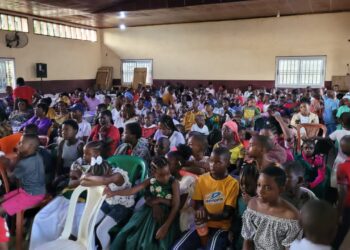
The Esplanade of the National Museum in Yaoundé is no stranger to history, but on Saturday, July 18, 2026, its grounds pulsed with a different kind of movement. Hundreds of runners, traditional performers, and spectators converged on the iconic square for the premiere edition of the Yaoundé Cultural Marathon, an event designed less around the stopwatch and more around the shared heartbeat of Cameroon’s cultural diversity.
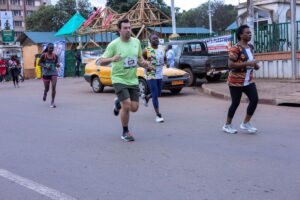
Over 200 participants lined up across three distances, a 2km children’s fun run, alongside 5km and 10km tracks. Yet the traditional podium chase quickly faded into the background. In its place was a striking visual spectacle: men, women, and elders navigating the capital’s avenues draped in traditional attires, their movements turning the asphalt into a vibrant canvas of heritage.
A Sacred Hub for National Heritage
The choice of the National Museum as the event’s epicenter was intentionally symbolic. Framed as a living monument to Cameroon’s vast ethnic identities, the landmark provided a fitting backdrop for an initiative aimed at boosting national unity and cultural tourism.
“The choice of the National Museum as the marathon’s start and finish hub was deliberate,” explained project founder Afowiri Fondzenyuy, famously known as the Toghu Marathoner and a Guinness World Record holder.
“Its profound symbolism helps display Cameroon’s diverse ethnic identities which we are all called to harness and boost our country’s cultural tourism industry.”
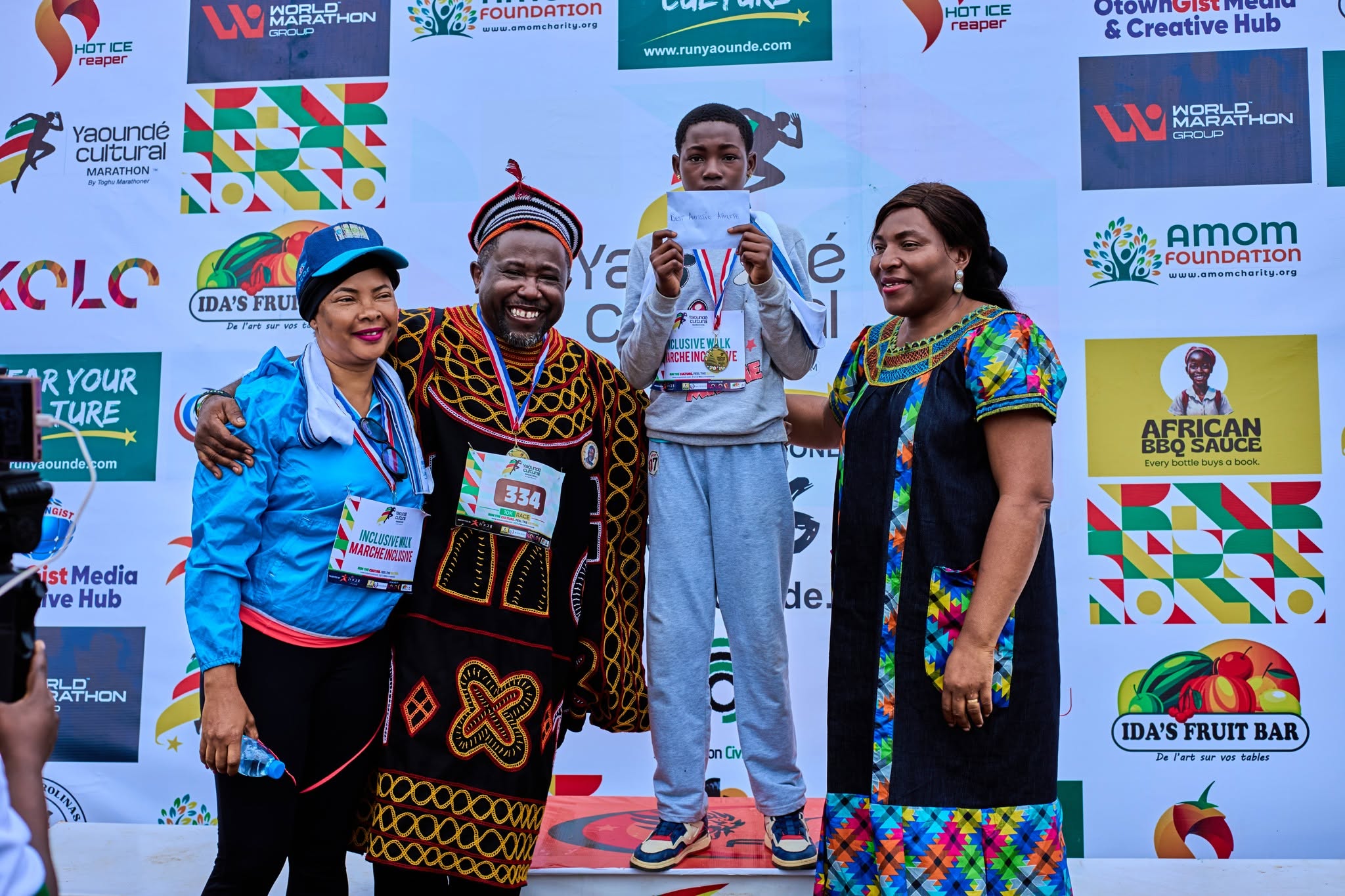
The true heart of the day revealed itself during the inclusive walk from the National Museum to Lac Municipal and back. Steering away from elite athleticism, the procession brought together diverse community groups, including members from the Maison Bleue de Julien Autism Centre, the Centre des Jeunes Aveugles Réhabilités du Cameroun (CJARC) led by Dr. Coco Bertin, the Association pour la promotion des Albinos au Cameroun (APAC), and athletes navigating the course in wheelchairs.
For Fondzenyuy, whose personal running career spans over 20 global races, connecting athletic endurance to grassroots social causes remains the fundamental objective.
Beyond the Finish Line: A Vision for Cultural Exchange
The organizing committee frames the Yaoundé Cultural Marathon as more than a single morning on the calendar; it is envisioned as the seed for a weeklong international festival. The goal is to project a dynamic image of Cameroon to the global community while building strategic bridges with diaspora networks, embassies, and cultural institutions.
Future editions aim to draw delegations from all ten regions of Cameroon, while welcoming international participants to run under their own national flags and display their unique traditions. Beyond the track, the movement continues to champion autism advocacy, push for inclusive education for children with special needs, and open doors for youth and women as performers, volunteers, and cultural entrepreneurs.
During the post-event debriefing, Charles Kouoh Kotte, Secretary General of the Cameroon Athletics Federation, emphasized this shift in focus.
“Unlike other races the Federation organizes, this seeks to promote social cohesion through physical fitness, healthy living, cultural celebration, and sports for all, not limited only to professionals,” Kouoh Kotte noted, commending the technical, medical, security, and communication teams for executing the historic event.
Grounded in Tradition, Looking to the Future
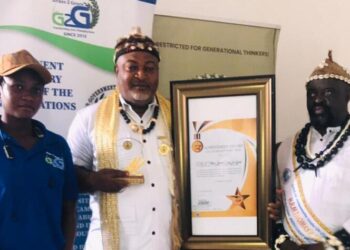
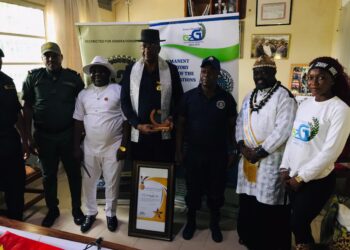
The marathon’s connection to the National Museum runs deep. In July 2025, Fondzenyuy officially donated his record-winning Toghu running kit, worn during the 2024 Tokyo Marathon when he earned his Guinness World Record, to the museum’s permanent collection, alongside his Abbott World Marathon Majors Six-Star plaque.
Having completed his seventh continent in February 2026 at Mount Kilimanjaro, his return to Yaoundé represents a deliberate effort to reconnect diaspora energy with local impact.
As the noise of the crowds settled and the streets returned to their daily rhythm, the inaugural run left behind a clear footprint: a demonstration that when sport is stripped of raw competition and wrapped in culture, the finish line belongs to everyone.
Race Results Snapshot
While the focus remained on community and culture, the inaugural edition celebrated top performances across several categories:
Tchoupteng T. Franck won the men’s 10K race, while Kenya’s Jepkoech Marion claimed the women’s 10K title. Zakariyahu Ibrahim and Otomo Mendouga won the men’s and women’s 5K categories respectively, while Tchoula Tesso Duval and Alangha Ashely Mbong won the boys’ and girls’ Children’s 2K races.