Story, Louvier Kindo Tombe
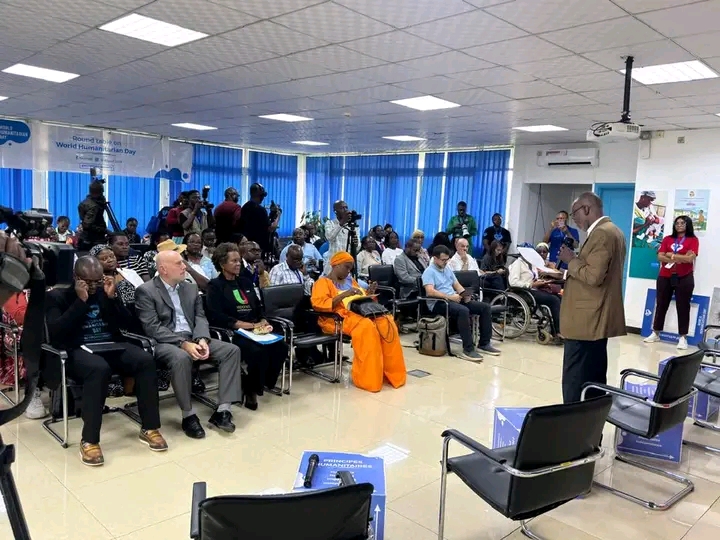
In commemoration of World Humanitarian Day 2026, UNICEF organized a landmark round table at its Yaoundé headquarters under the global banner « Agir pour l’humanité » (Act for Humanity).
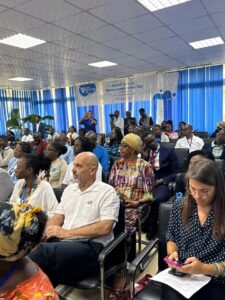
The two-hour strategic session gathered around 100 stakeholders—including UN agencies, international and national NGOs, government representatives from MINAT and DPC, diplomats, civil society leaders, and media organizations—to confront pressing humanitarian challenges in Central Africa.
Across regions grappling with displacement, environmental shifts, and economic strain, discussions centered on shifting power to local hands, securing safe passages for frontline teams, and ensuring emergency responses build long-term resilience.
Opening the session, United Nations Resident and Humanitarian Coordinator in Cameroon, Dr. Issa Sanogo, emphasized the imperative of collaborative action. He stated that addressing complex crises requires a deliberate shift toward a sustainable transition and genuine local ownership, where no actor or community is left behind in the response process. He noted that safeguarding affected populations depends on establishing stronger, seamless collaboration mechanisms among national authorities, international partners, and grassroots civil society organizations on the ground.
The dialogue moved directly into actionable strategies for aid localization and regional ownership. Simon Nsabiyeze, Head of Office at OCHA, emphasized the urgency of handing operational leads to local actors to build resilient community systems.
Supporting this direction, representatives from Plan International (leading the NW/SW Humanitarian Platform) alongside CHOI detailed operational frameworks for empowering national NGOs directly on the ground.
 To ensure long-term sustainability, discussions led by MINSANTE and UNICEF highlighted youth engagement through the National Youth Council as vital for maintaining aid delivery in hard-to-reach areas.
A parallel focus of the round table was ensuring an environment where aid workers and civilians are protected. Antoinette Chibi, Country Director at the International Rescue Committee (IRC), alongside MINAT officials, outlined steps to secure an enabling environment for humanitarian workers. Operational logistics were further tackled as OCHA and the International NGO Safety Organisation (INSO) addressed access bottlenecks, detailing real-time monitoring tools in high-risk regions. Concrete field constraints were raised by DEMTOU, focusing on safety protocols and community-based protection mechanisms.
Reaffirming the imperative of child protection and community-centered development, UNICEF Representative in Cameroon, Nadine Perrault, brought the focus back to the human element. She underscored that humanitarian challenges are not merely logistical or financial, but profoundly human, highlighting that empowering local actors is essential to creating a safe, protective environment where vulnerable populations and humanitarian workers can operate safely.
The session concluded with an interactive Q&A exchange with the press, reinforcing that protecting aid workers and fostering local leadership remain non-negotiable priorities for Cameroon’s humanitarian response.