Story, Louvier Kindo Tombe
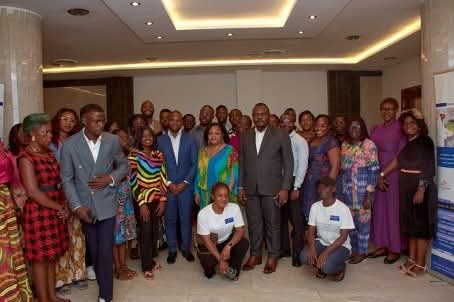
Earlier this year, the Cameroon Economic Policy Institute (CEPI) of the Henri Kouam Foundation convened a panel discussion on “Women’s Entrepreneurship in Cameroon: Opportunities, Challenges, and Prospects.” While the event itself took place in May, its impact is now being felt across the country.
Entrepreneurs like patience, a small-scale manufacturer in Yaoundé, have used the insights gained during the panel to secure bank loans and expand production.
“I can now boast of a bank account and the bank is about to offer me a loan to boost my productivity,” she shared.
The panel brought together experts including Prof. Kelly Mua Kingsley, Financial Engineer and Director of Finance Operations for the State, and Mrs. L’or Sylvie Mafouo, Regional Director at Afriland First Bank.
Mrs. L’or Sylvie noted that although women run 40% of Cameroon’s businesses, they often struggle to access finance due to administrative bottlenecks and low financial literacy. She encouraged women to open bank accounts and formalize their businesses to build credit histories, while emphasizing the importance of enforcing women’s property rights to improve access to loans.
Prof. Kelly Mua Kingsley echoed the message, stressing that entrepreneurs need credible business plans, accurate records of sales and expenses, and a stable customer base to demonstrate their potential.
He also encouraged women-led businesses to look beyond national borders, highlighting the opportunities offered by the African Continental Free Trade Area to export products across the continent.
Both experts highlighted that banks are increasingly willing to lend to businesses that show strong market demand, even when collateral is limited.
Since the panel, many participants have taken these lessons to heart, opening bank accounts, formalizing operations, refining business plans, and exploring export opportunities. CEPI is building on this momentum by rolling out mentorship programs, financial guidance, and networking opportunities to help women entrepreneurs scale their businesses and contribute more significantly to the national economy.
The stories emerging from the May panel demonstrate that expert advice, determination, and institutional support can turn challenges into opportunities.
For Cameroon’s women entrepreneurs, the conversation on empowerment has moved decisively from the conference room to the marketplace, with concrete results now shaping the country’s business landscape.
Recommendations for Women Entrepreneurs
To support women-led businesses, the panel recommended targeted training in export and import procedures, equipping entrepreneurs with the knowledge to navigate cross-border trade.
The formalization of business activities was also emphasized as a critical step to access financing and attract institutional support. Finally, expanding government-backed loan guarantee schemes to include more banks and financial institutions would ensure broader access to credit, enabling women entrepreneurs to grow sustainably and competitively.