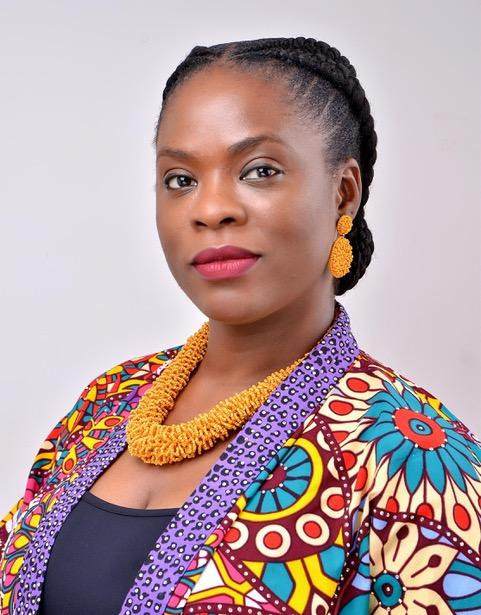
Chika Idoko, Head of Equality Diversity and Inclusion, British Council, Sub-Saharan Africa
LAGOS, Nigeria, 10 August 2023 -/African Media Agency(AMA)/- As leaders who support mainstreaming equality, diversity, and inclusion, we aim to ensure that every individual, regardless of their background, enjoys the same rights, opportunities, and dignity. However, the grim reality is that socioeconomic inequality creates an uneven playing field from the very beginning of life. For instance, children born into impoverished communities often face limited access to quality education, healthcare, and nutrition, hindering their ability to reach their full potential. We must take action to reduce societal challenges posed by socioeconomic inequality.
Why act now? Unforeseen circumstances such as the COVID-19 pandemic have further exacerbated inequality, having caused job losses, reduced income, and limited the ability of households to manage risks. UNECA estimated the pandemic pushed over 55 million Africans into extreme poverty in 2020 and reversed more than two decades of progress in poverty reduction on the continent.
Socioeconomic inequality highlights the disparities in economic and social resources that are linked to social class. The urgency to act has become more pressing as the disparities between the privileged few and the marginalised masses widen. In the workplace, it fosters an uneven distribution of power and influence, limiting the representation of diverse voices in leadership positions. Organisations in Sub-Saharan Africa can play a pivotal role in reshaping the destiny of this vibrant region.
For the British Council, socioeconomic inequality is central to addressing inequality. It is linked to socioeconomic background which is highlighted within our diversity strategy as a cross-cutting theme and includes age, race/ethnicity, religion/belief amongst others. We recognise that these areas intersect, and we are sensitive to other characteristics and the social and cultural norms that can mean people experience inequality or barriers to participation differently.
The UN has explicitly stated that socioeconomic inequality undermines our ability to access our human rights and that socioeconomic status can be seen as grounds for discrimination. For context, in 2021 the World Bank report indicated that over 40% of Sub-Saharan Africa’s population still lives below the international poverty line of $1.90 per day.
According to the International Labour Organisation (ILO), women’s participation in the labour force in Sub-Saharan Africa stands at just 47%, well below the global average of 55%. This disparity is compounded by gender wage gaps, leaving women with limited access to leadership roles and inhibiting progress toward gender equality. Similarly, persons with disabilities face significant challenges in accessing employment opportunities.
The British Council, while on the journey to mainstream equality, diversity and inclusion, remains conscious of the role socioeconomic inequality plays in systemic discrimination and in holding people back due to circumstances beyond their control. Efforts to address social disadvantage are acknowledged as we strive for greater inclusion across our staff groups and to widen opportunities for access and engagement across our programmes and services. Some of our efforts are reflected in the design and delivery of our programmes. For example, our work in Non-Formal Education strengthens systems and civil society to create an enabling environment for strong and inclusive communities. We focus on young people and work in fragile contexts through partner-funded programmes in Ethiopia, Nigeria, and Sudan.
Our Technical Vocational Educational Training (TVET)/Skills programmes focus on developing high quality TVET systems so that they are relevant for employment and entrepreneurship. Demand-driven and reform-led, our work aims to propel better life prospects for young people and stronger socioeconomic development with outcomes such as decent jobs and a better-skilled workforce in Sub-Saharan Africa. Delivery locations include Ghana, Malawi, Tanzania, Mauritius, Mozambique, South Africa, and Sudan. Another programme, Skills for Inclusive Digital Participation (SIDP), creates opportunities for digitally excluded individuals to develop the skills they need to participate fully in the digital economy and in wider society. In Sub-Saharan Africa, SIDP provides inclusive digital literacy training at basic and intermediate level to women, youth, and people with disability (PWD) in Kenya and Nigeria as a pilot project.
In 2020, the British Council revised its Equality, Diversity and Inclusion strategy to include socioeconomic background (SEB) as a distinct theme. For us, the target of engaging with socioeconomic background more deliberately is to raise awareness and prompt considerations for concrete commitments to reduce inequality across the region. The rationale behind this approach is as follows:
- To measure and improve socioeconomic diversity within the workforce and, in so doing, improve social mobility
- To raise awareness of socioeconomic background and how it intersects with inequality with key partners, influencers, decision makers to prompt action
- To prompt action for employers to improve socioeconomic diversity using data insights to inform culture and leadership, hiring and career progression, and advocacy
- To map the British Council’s work to how it supports the advancement of the United Nations Sustainable Development Goals (SDGs) 1 (No Poverty), 8 (Decent Work and Economic Growth), and 10 (Reduced Inequalities, within and among countries)
The overall objective is to drive sustained commitment and catalyse transformative action to mainstream equality, diversity and inclusion for measurable progress in this area. Socioeconomic background is intricately linked to wider societal issues such as shadeism/ colourism in Africa. Some studies have been explored to establish the extent to which skin tone variation is important across some essential domains, including upward mobility. For context, colourism and shadeism have historically been widely believed to be linked to slavery, which upheld a system of social class or distinction based on skin colour. Today, shades of skin colour maintain social significance reaching into the lives of ordinary people and playing a part in everyday decisions about employment, education, housing, beauty, marriage, and partnership.
The British Council will facilitate an initial panel discussion in November 2023 to identify regionally relevant and viable interventions to help raise awareness of socioeconomic background issues and interventions to dismantle the barriers to full participation in the workplace and formal economy. Calling on leaders, decision-makers and key stakeholders in international organisations, the private sector, government, academia, and communities across Sub-Saharan Africa to join the efforts to accelerate action and ensure a holistic approach to tackling socioeconomic inequality. The forum will generate case studies of good practice to inform, encourage, and eventually act as a catalyst for action in the various operating contexts.
Let us unite in this endeavour, driven by a shared commitment to foster workplace cultures that go beyond the transactional in equity, diversity, and inclusion efforts and dismantle the barriers of socioeconomic inequality. The future is Africa; take action today.
Distributed by African Media Agency (AMA) on behalf of The British Council.
About the British Council
The British Council builds connections, understanding, and trust between people in the UK and other countries through arts and culture, education, and the English language.
We work in two ways – directly with individuals to transform their lives and with governments and partners to make a bigger difference for the longer term, creating benefits for millions of people all over the world.
We help young people gain the skills, confidence, and connections they are looking for to realise their potential. We support youth to learn English, get a high-quality education, and gain internationally recognized qualifications. Our work in arts and culture stimulates creative expression and nurtures creative enterprise.
We are on the ground in over 20 African countries and deliver impact working with local institutions and partners.
For more information or media enquiries please click here.
The post Bridging the Divide: Confronting Socioeconomic Inequality in Sub-Saharan Africa appeared first on African Media Agency.