Story, Louvier Kindo Tombe
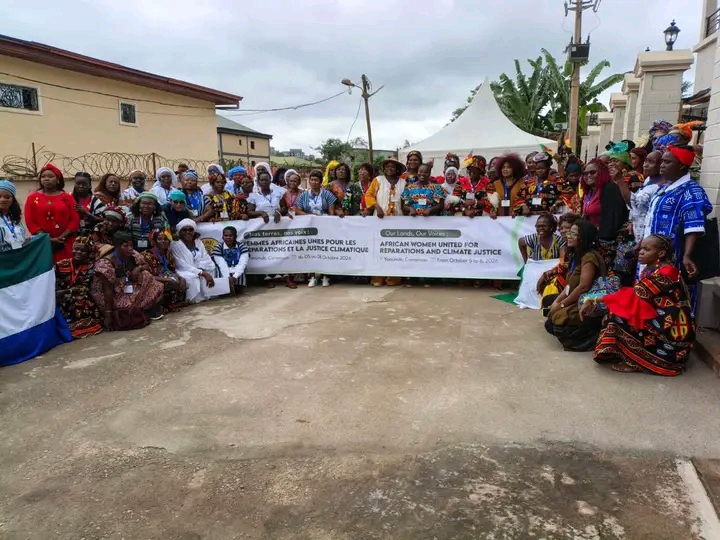
The Yaoundé Assembly was organized in collaboration with civil society organizations Green Development Advocates (GDA). The historic gathering marked the first time the assembly was hosted in Central Africa.
Established in 2021, the initiative acts as a grassroots alternative to international summits that frequently bypass local realities, serving as a platform for communities to turn their diverse experiences into collective strength.
“The 2026 Women’s Climate Assembly was not about the come-together itself, but about the struggles of women in their respective communities and the solutions that they bring to the table,” says Shamuyarira Winnet, WoMin African Alliance.
“Those responsible for climate change are in their comfort zones, such as in COP meetings, while those who bear the highest brunt are struggling to mitigate the impact alone.”
Diverse Realities, A Common Language of Resistance
Delegates at the assembly spanned different cultures, languages, and national realities. They were 43 women who came in from countries including Burkina Faso, Nigeria, Niger, Liberia, Côte d’Ivoire, Guinea, Sierra Leone, Senegal, the Democratic Republic of Congo, Zimbabwe, Zambia, and host nation Cameroon.
From Sakinatou Ouedraogo, who highlighted the specific environmental crises facing women in Burkina Faso, to Ntep Ntep Lezina Patrick who stressed on the Nigerian milestone, all the activists from the coastal and forest regions of Central Africa shared their common challenges and interests. Yet despite these distinct backgrounds, their core challenges converge on the frontlines of ecological collapse:
Land Rights & Territory Defense: Overcoming structural barriers that deny women legal land ownership while defending ancestral territories against land grabs.
Agro-Industrial Exploitation: Resisting unchecked deforestation and large-scale agricultural expansions that displace communities.
Environmental Degradation: Confronting ocean pollution, soil depletion, and resource extraction that destroy biodiversity and jeopardize rural livelihoods.
By coming together in Yaoundé, these delegates sought to dismantle the false impression that grassroots communities are passive accomplices to state policies or Western-driven frameworks that run contrary to African realities.
“They come with different languages, but speak a common language of justice, dignity, resistance, solidarity, and hope. Different voices, one movement, one continent, one vision for climate justice,” as revealed ABY DIA from Syndev Senegal.
Centering Women in Continental Climate Action
Because women are the primary stewards of agricultural land, water sources, and natural resources across the continent, delegates insisted that sustainable solutions cannot be crafted without those who bear the brunt of climate impacts.
The 4th Women’s Climate Assembly concluded with delegates formulating a unified strategic plan to advance community-led climate justice, protect natural ecosystems, and secure a future where African communities can live with dignity.