 Story, Louvier Kindo Tombe
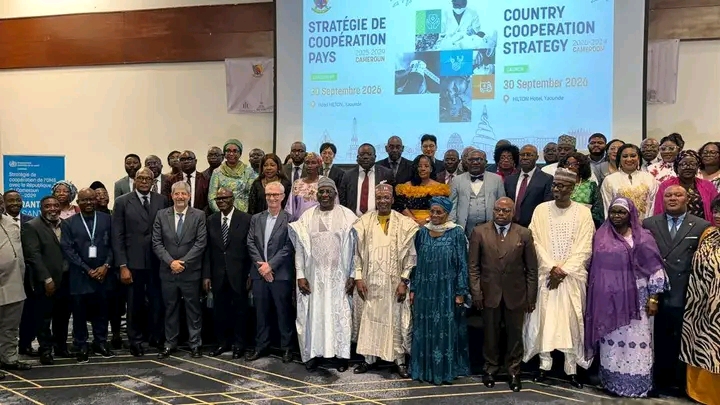
The World Health Organization (WHO) and the Government of Cameroon have officially launched the 2025–2029 UN Country Cooperation Strategy. The ceremony took place at the Yaoundé Hilton Hotel.
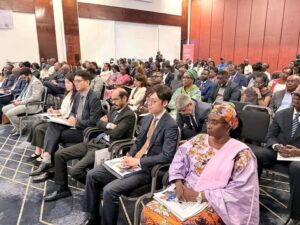
This major gathering brought together civil society organizations, religious bodies, government officials, private sector representatives, and diplomats to redefine how healthcare is delivered through true collaboration.
Speaking at the ceremony, WHO representative in Cameroon Dr. Magaran Monzon Bagayoko, outlined three pillars for this new era of partnership: transparency and accountability, collective ownership, and a firm shift from strategy to results.
Representative of the UN System Coordinator in Cameroon stressed that responses must be gender-sensitive and disability-inclusive, ensuring that no community is left behind.
Building on the previous 2017–2024 framework—which helped shape the National Health Plan around primary healthcare—the new strategy focuses on some key priorities: bringing care closer to the population, protecting communities against health emergencies, prioritizing mental health, and enforcing rigorous monitoring.
However, the launch also sparked an urgent call for reform. It was only observed that health cooperation is too often confined to high-level diplomatic meetings behind closed doors, far removed from the realities of everyday citizens. Yet, the true measure of any health policy is felt on the ground, in the communities that need it most.
That explains why Cameroon’s Minister of Public Health, Dr. Manaouda Malachie, flanked by the Minister of Women’s Empowerment and the Family, Marie-Therese Abena Ondoa, praised the long-standing partnership with the WHO but delivered a striking critique of traditional aid implementation.
He pointed out that approximately 70 percent of health interventions go toward indoor seminars, while only 30 percent reach the field.
The Minister issued a direct challenge to change the narrative and prioritize hands-on fieldwork that directly impacts local communities.
The ceremony concluded with the official handover of the strategy document to Minister Manaouda Malachie by the WHO representative, marking the beginning of a crucial operational phase built on mutual commitment and action.