Story, Louvier Kindo Tombe
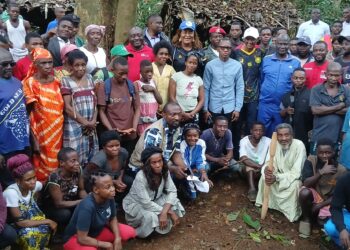
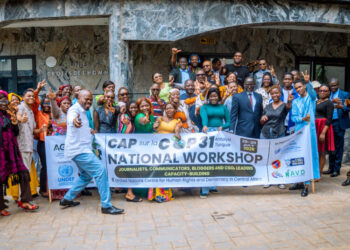
Organized by the civil society organization Green Development Advocate (GDA) in collaboration with local stakeholders, the commemorative event was themed “Paying Homage to Indigenous Midwives: Preserving Life and Well-being.”
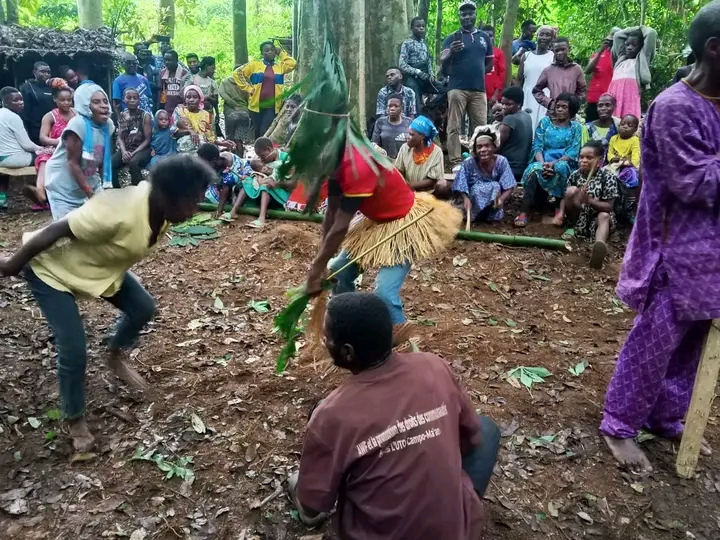
The grounds came alive with cultural pride through traditional dances, artisan craft exhibitions, and displays of sacred medicinal botany.
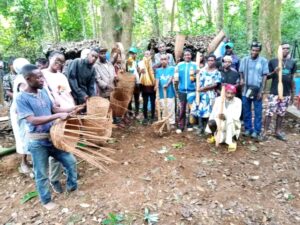 For the Bagyeli, an indigenous midwife is far more than a birth attendant, she is a master ethnobotanist and a living bridge between generations.
Among those honored was Angon Marguerite, a Bagyeli midwife who has spent the last five years quietly serving her community. With a flawless track record of four successful deliveries and zero casualties, Marguerite’s expertise relies on a profound, handed-down knowledge of the forest.
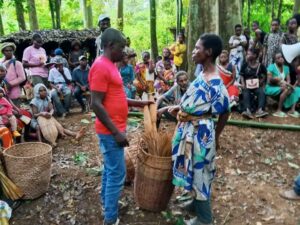 She prepares specialized herbal infusions for expectant mothers to ease labor pains and ensure smooth deliveries. For Marguerite and her peers, rigorous prenatal care ramps up as a pregnancy reaches its eighth month, a critical window when midwives use precise herbal formulas to manage and correct complications naturally before birth.
Delivering the keynote address following a multi-stakeholder exchange, Ekane Nkwele, Project Manager at GDA, captured the essence of their indispensable practice:
“This year’s theme reminds us that Indigenous midwives are much more than women who assist childbirth. They are guardians of life, custodians of ancestral knowledge, protectors of culture, and defenders of community well-being.”
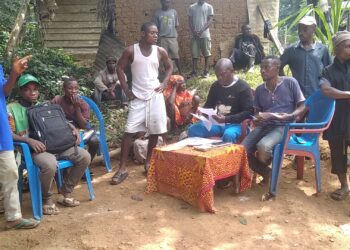
Beyond celebration, the gathering served as a vital forum for civic dialogue. Representatives from villages like Asok, Akok, Ebemvok, Efoulan, Mvie, Nko’o Ngop, and Nlongkeng seized the occasion to lay bare their daily realities before state officials.
They highlighted critical shortages of local schools, persistent youth unemployment, and the urgent need for full civic integration and peaceful, collaborative coexistence with neighboring Bantu communities.
Responding directly to these advocacy points, local authorities emphasized partnership, social cohesion, and institutional support. The Divisional Officer (DO) of Akom II, Avele Ambassa Alain Christophe, affirmed the administration’s firm commitment to guaranteeing peace, security, and harmonious coexistence between the Bagyeli and Bantu populations.
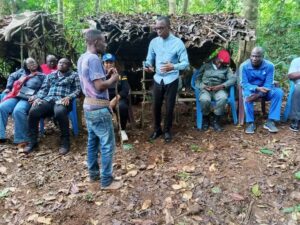 Highlighting concrete steps toward civic inclusion, the Mayor of Akom II, Mme Elisabeth Meka épse Ateba Mballa, pledged that the council would continue establishing essential legal documents, such as birth certificates and national identity cards, for the Bagyeli community free of charge.
When midwives like Marguerite were formally presented to the administrative bench, officials commended their selflessness and pledged health delivery kits to enhance safety while honoring traditional methods. Encouraging dual engagement with civic structures, the Mayor noted:
“We call on traditional midwives to report every single case of delivery at the council so that legal documents can be prepared. We likewise invite expectant mothers to register with competent council services, even while following up on maternal care with indigenous midwives.”
As the event concluded, GDA representatives reiterated that honoring indigenous midwives means protecting both their dignity and the surrounding ecosystems that yield their natural remedies.
To them, every safe delivery overseen by midwives like Marguerite represents hope; every medicinal plant protected reflects resilience; and every step toward social equity ensures a stronger, more inclusive Cameroon.