Story, Louvier Kindo Tombe
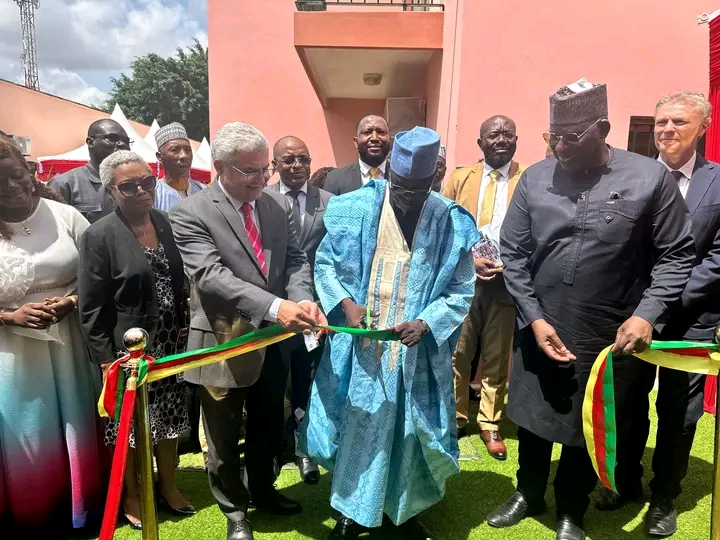
On June 12, health officials, international delegates, and scientific partners gathered at the Centre Pasteur du Cameroun (CPC) to cut the ribbon on a completely transformed facility. Hosted by the CPC’s renowned Virology Department, this revamped national asset marks a monumental leap forward, reinforcing Cameroon’s health and sanitation leadership within the Central African sub-region.
To understand the weight of this inauguration, one must look at the complex reality of polio eradication. While Africa was officially declared free of wild poliovirus in 2020, variant strains of the virus continue to circulate across the continent. This reality demands an uninterrupted, aggressive epidemiological riposte.
Until now, Cameroon’s diagnostic shield was heavily strained. Operating out of its original location on the CPC’s “Campus A,” the old center was severely starved for space and adequate equipment. Yet, it was tasked with processing a staggering volume of data annually: over 2,500 human samples and approximately 1,000 environmental/animal samples.
Because of these severe structural bottlenecks, complex diagnostics could not be performed locally. Vital samples had to be shipped to overseas reference laboratories. The resulting logistical delays meant that health workers often waited weeks for definitive data, weeks during which a virus could silently spread.
From “Campus A” to “Campus B”: Three Times the Power
Thanks to a strategic intervention by the World Health Organization (WHO) Regional Office for Africa (AFRO) and international partners, the narrative has completely changed.
The laboratory has been relocated to a spacious new home on Campus B of the Centre Pasteur. The upgrade is staggering: the new facility is three times larger than its predecessor. It provides world-class working conditions for local scientists, features a dedicated local data center, and completely eliminates the reliance on foreign labs.
Diagnostics that once took weeks can now be completed locally in a fraction of the time. In the logistics of an outbreak, this shortened deadline changes everything.
As the Head of the National Polio and Measles Laboratory, Dr. Endengue Zanga Marie Claire Epse Nsenge, powerfully noted during her presentation of the new merits of the center:
”A single day gained in the fight against polio is billions of lives saved.”
A Multi-Virus Fortress and Regional Hub
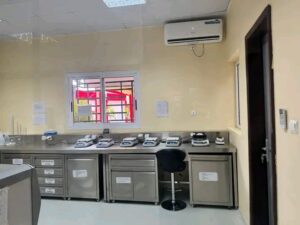 The “added advantages” of the new facility stretch far beyond its original mandate. Armed with expanded biosafety infrastructure and state-of-the-art equipment, the laboratory is now fully capable of surveying a wide array of other dangerous viruses, preparing Cameroon for future pandemic threats.
Furthermore, it establishes Cameroon as the scientific anchor for Central Africa. While a few neighboring nations previously relied on Cameroon for baseline testing, this spacious new facility opens the door wide for expanded sub-regional support.
Looking to the future, the laboratory is positioning itself as a premier sub-regional training and research hub. With ample space to host international students, the center is primed to foster a new generation of African scientists through robust regional collaboration and continuous research.
Ensuring the Future: Sustainability and Care
The ceremony also brought crucial reflections on the long-term survival of such high-tech infrastructure. A concrete sustainability model has been baked into the project to ensure the facility does not fall into disrepair.
Highlighting the fundamental role of diagnostics, the WHO Representative at the ceremony, Magaran Bagayoko Mozom stated during the event:
”Without science, there is no health. Laboratories are what help advance public health and reinforce our diagnostic capacity.”
He emphasized that while building a state-of-the-art center is a major victory, the true test lies in maintaining it. He urged stakeholders to ensure it remains functional and sustainable for decades to come, reiterating the WHO’s unwavering commitment to assisting the center.
Echoing this call to action, the Representative of the Minister of Public Health, General Inspector, Mr. BOUKA, who officially declared the center open, reminded the audience that the fight against polio demands a constant and collective effort.
He closed the ceremony with a strong directive to the laboratory’s staff and management, calling for the meticulous use of the sophisticated equipment and rigorous, proper care of the entire center.
With its doors now officially open, Cameroon’s new National Polio Laboratory stands as a testament to what global partnership can achieve—transforming a structure from ruins into a beacon of scientific excellence that will safeguard health across the continent.