Story, Louvier Kindo Tombe
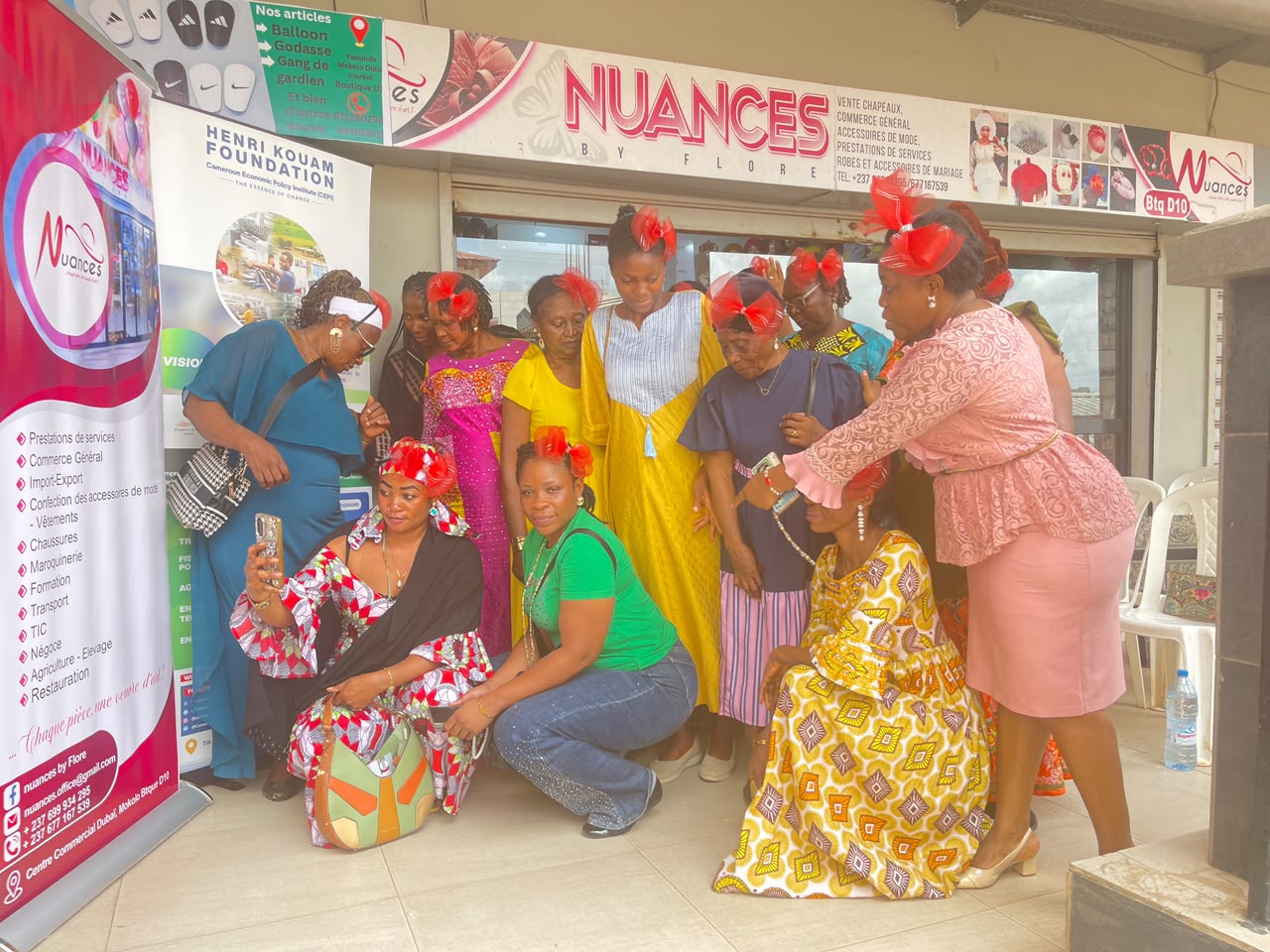
The Cameroon Economic Policy Institute (CEPI), a think tank widely recognized for its high-level macroeconomic advocacy, has taken its mission directly to the streets of Yaoundé. In a strategic partnership with local brand NUANCES, CEPI launched a hands-on training workshop on fascinator design on Monday, May 11, 2026, marking a deliberate shift from policy paper to practical economic empowerment.
Held at “Centre Commerce Dubai” in the bustling Mokolo neighborhood, the four-hour session brought together a diverse group of 15 to 20 women. Participants mastered the intricate, hands-on production cycle of fascinators—highly sought-after headpieces widely worn at Cameroonian weddings, cultural ceremonies, and formal events. Under expert guidance, they learned material selection, structural framing, design aesthetics, and high-end finishing techniques.
Crucially, the training did not stop at craftsmanship. Recognizing that production is only half the battle, the organizers integrated basic entrepreneurial modules to teach the women how to brand, price, and market their creations, effectively trading systemic trade barriers for immediate income-generating potential.
Bridging the Gap Between Policy and the Pavement
 For CEPI, this initiative represents a profound operational evolution. The institute made national headlines in 2024 and 2025 for its successful advocacy in suspending value-added taxes (VAT) on locally milled flour and its extensive work with policymakers to simplify cumbersome import and export procedures. Now, CEPI is actively investing in human capital to ensure that marginalized demographics—particularly women and youth—actually possess the skills needed to exploit these improved trade frameworks.
The collaboration with NUANCES serves as the opening blueprint for a new era of locally-led community projects for the institute, which has set a verifiable target to economically empower 1,000 women across the country.
“Inclusive growth and free markets cannot thrive in a vacuum,” CEPI noted during the event. “While we continue to work alongside policymakers to eliminate regulatory red tape on a national level, we must simultaneously equip our women at the community level with the tangible skills required to confidently step into domestic and international trade.”
 As the beautifully crafted headpieces were put on display at the close of the session, the true takeaway was clear: by trading red tape for thread, CEPI is ensuring that the benefits of economic reform are felt right at the grassroots.