Story, Louvier Kindo Tombe
When her baby arrived weeks too early, fear was the first thing the young mother felt, fear she might not survive the night, fear she could not afford the care her fragile newborn needed.
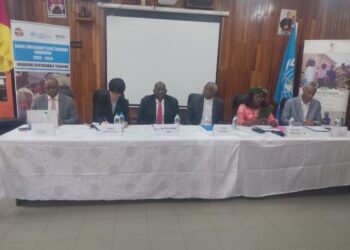
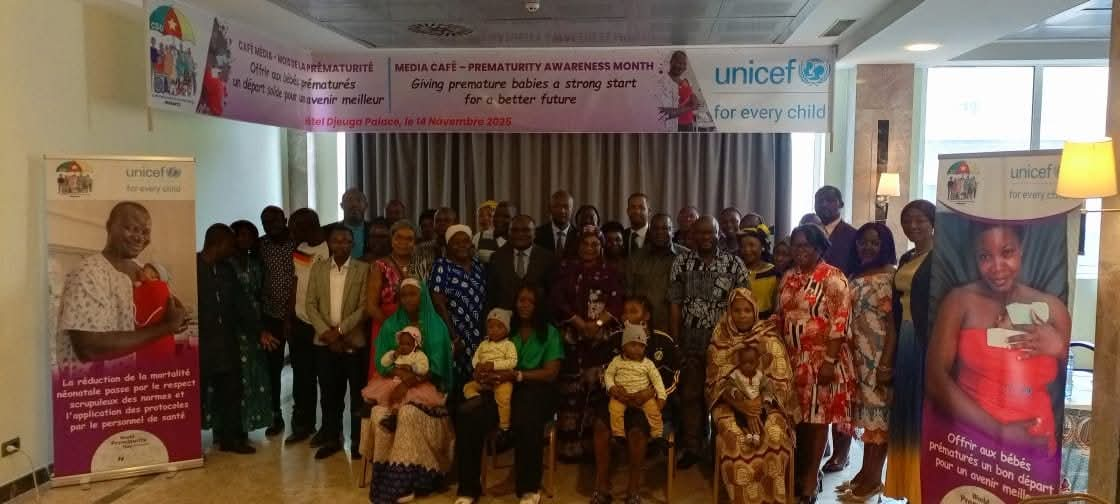
“My baby was so small I was afraid to touch her,” a 42-year-old single mother told participants at a Media Café on Prematurity organised in Yaoundé by the Ministry of Public Health and partners. “I kept asking myself, how will this child live?”
Born underweight and struggling to breathe, the newborn was placed in neonatal care, surrounded by machines and tubes. For days, the mother watched helplessly as medical costs rose and hope seemed to shrink.
“I thought only the incubator could save my baby,” she said. “But the bills were becoming too much, and I was losing strength.”
A simple method that brought hope
Everything changed when health workers introduced her to Kangaroo Mother Care (KMC), a simple, low-cost method where a premature baby is placed skin-to-skin on the mother’s chest, allowing body heat, breastfeeding and close contact to support the baby’s survival.
“At first, I didn’t believe it,” she admitted. “They told me I could help save my baby just by holding her.”
Through kangaroo care, her baby was kept warm, breastfed more easily and monitored closely, without the heavy dependence on expensive equipment.
“When they showed me how to carry my baby on my chest, I felt hope for the first time,” she said. “I was no longer just watching. I was helping my baby live.”
Less cost, more connection
For the mother, kangaroo care was not only effective, it was affordable.
“The cost reduced, and that gave me strength,” she explained. “I could stay with my baby day and night. I could feel her breathing. I could feel life returning.”
Slowly, the baby began to gain weight. Breathing stabilised. The mother’s confidence grew alongside her child’s strength.
“I saw my baby responding to my warmth,” she said. “That is when I knew she wanted to live.”
A solution for thousands of families
Health experts at the event noted that kangaroo care is especially vital in Cameroon, where incubators are limited and neonatal units are overstretched.
“Kangaroo Mother Care is proven to save premature babies, especially in low-resource settings,” explained neonatologist Dr Ngou Patrick, present at the Media-Cafe. “It reduces infections, supports breastfeeding and strengthens the bond between mother and child.”
Despite its effectiveness, many families remain unaware of the method.
Turning pain into purpose
As she shared her story, the room grew quiet. Her experience reflected the reality of thousands of Cameroonian families facing premature birth with limited resources.
“I want mothers to know they are not powerless,” she said. “Even when the baby is born too soon, love and care can still save a life.”
Her baby survived. Many others do not.
As Cameroon marks Prematurity Awareness Month, her testimony stands as a reminder that simple, human-centred solutions can make the difference between loss and life.
“If kangaroo care could save my baby,” she concluded, “then no mother should face this journey without knowing about it.”