 Story, Louvier Kindo Tombe
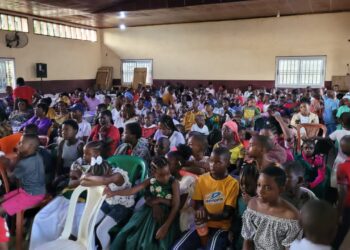
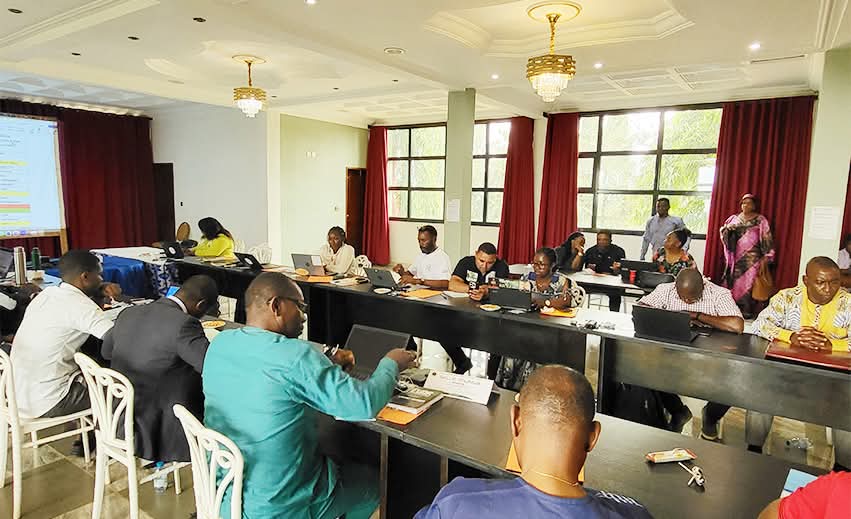
The project was officially launched on September 10, 2025, in Yaoundé during a two-day workshop that gathered indigenous leaders, civil society organizations, government officials, and international partners.
“Our goal is to encourage confidence in indigenous people and local communities, so they can secure access to their ancestral lands and forests, and tap benefits from them for their livelihoods,” says Jolien Schure from Tenure Facility.
Tenure Facility is a global organization dedicated to advancing indigenous land rights.
Over the next three years, SEGPACL will empower communities not only to reclaim their rights to land and forests but also to build sustainable models of conservation and governance.
Indigenous leadership at the core
At the heart of the initiative are two grassroots associations: the Bagyeli Cultural and Development Association (BACUDA) and the Sanguia Baka Buma’a Kpode Association (ASBABUK). These groups will lead the project’s implementation with technical and financial backing from Tenure Facility.
“The first step is to identify households facing land and forest challenges, then design strategies to reclaim what has been unjustly taken,” explained Bibi Joseph Johnson, President of ASBABUK.
For Jeanne Biloa, President of BACUDA, advocacy is equally vital:
“We have to lobby civil society, government authorities, and decision-makers so they can support us in regaining our land and forests.”
Their action plans presented during the launch of the project places strong emphasis on inclusivity, ensuring that women, youth, and other marginalized groups actively shape decisions about land tenure and natural resource management. They partner associations will work with a handful of other community associations and their target is more than 20 local communities impacted, hundreds of families touched.
For communities, the project signals a shift from being passive subjects of land laws to active architects of their future. By anchoring leadership in local associations, SEGPACL acknowledges that those who have lived in harmony with the forest for centuries are best positioned to protect it for generations to come.
More than a land issue
SEGPACL goes beyond the fight for land titles. It seeks to address broader environmental and social challenges that affect Cameroon and the world.
Cameroon’s forests are under immense pressure from logging, agriculture, and infrastructure expansion. By strengthening indigenous stewardship, the project aims to slow deforestation, protect biodiversity, and contribute to global climate goals.
Research has consistently shown that communities with secure land rights are more effective at preserving forests than top-down systems of management.
“Indigenous people must feel assured that their land and forests are secure—that no other party can take them away,” said Jolien Schure of the Tenure Facility.
Globally, more than 2.5 billion people rely on customary or traditional land systems, yet only 10 percent of these lands are formally recognized. For indigenous groups in Cameroon such as the Baka, and Bagyeli, this gap often results in exclusion, forced displacement, and the erosion of cultural heritage.
Building a roadmap for change
During the workshop, participants discussed how SEGPACL could align with ongoing land reform in Cameroon. The two-day gathering was not just about launching a project—it was also about building partnerships, sharing knowledge, and creating momentum for systemic change.
One of the technical partners to the project is Green Development Advocate – GDA. “We shall monitor, evaluate, control, and follow up field activities of the different implementing partners,” says Nguena Mawamba Floriane Carrele, from GDA.
GDA will also be responsible of producing a financial and narrative report of the project at specific levels.
Looking ahead
Over the next three years, SEGPACL will be closely monitored as a test case for indigenous-led land and forest governance in Cameroon. If successful, it could serve as a model for neighboring countries and inspire broader reforms across the region. Tenure Facility revealed during the launch that there are possibilities of expanding the project to five years.
For the indigenous peoples of Cameroon, however, the project is more than a policy experiment—it is a lifeline. It represents the hope of moving “from roots to rights”: honoring ancestral ties while securing the legal recognition needed to thrive in today’s world.