When Mengue Medjo Marlyse Nadège Epse Massama, president of AFRiSC Campo, stepped into the mini trade fair village in Campo on the morning of December 12, 2025, she was momentarily stunned.
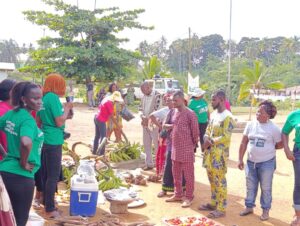
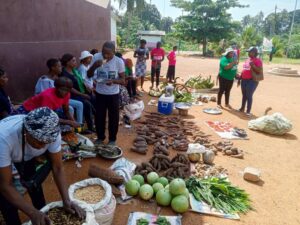
The usually quiet space was alive with colour, movement, and the determined voices of women proudly arranging cassava, plantains, vegetables, spices, fruits, and processed food items on neatly organized stands.
What struck her most was not just the abundance of produce, but the sheer number of women present.
“It was beyond what we expected,”she said, smiling as she moved from stand to stand.
Mengue Medjo Marlyse Nadège Epse Massama, President of AFRiSC Campo
“We are very happy with what we see today in Campo because Campo women are now capable of organizing this event by themselves.”
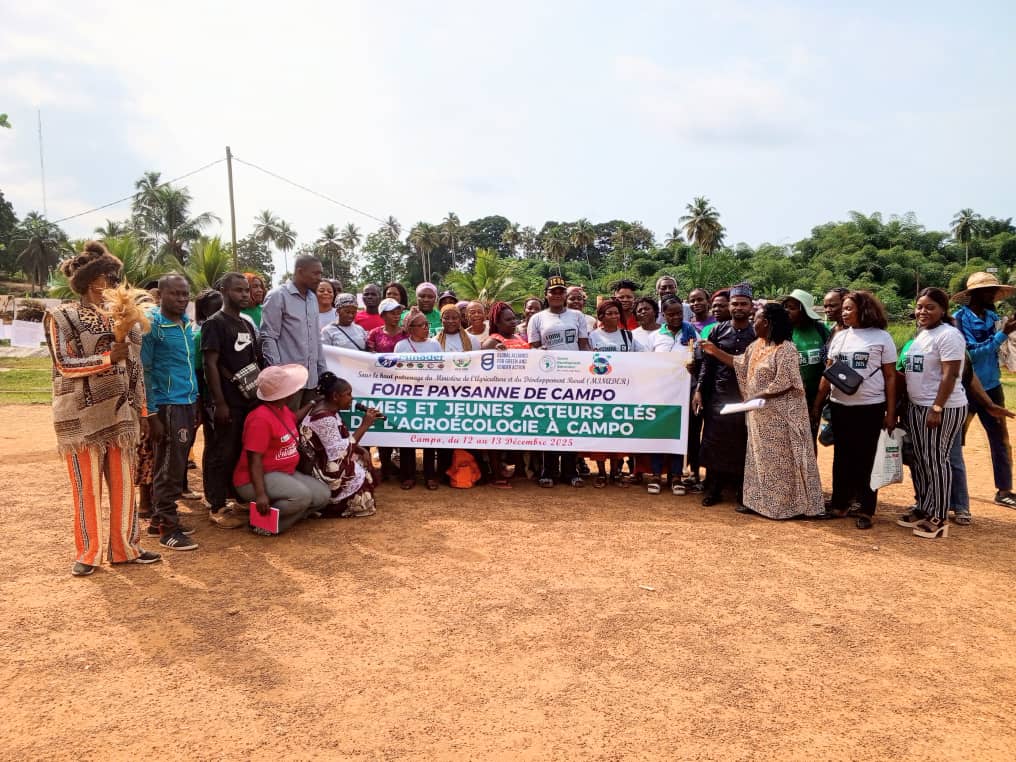
That moment captured the spirit of the third mini trade fair held from December 12 to 13, 2025, a gathering that went far beyond commerce. It was a statement of resilience, self-reliance, and collective ambition by the women of Campo, who have vowed to feed their population despite mounting social, economic, and environmental challenges.
A fair organized by women, for all
Unlike previous editions, this year’s mini fair was organized entirely by the women of AFRiSC Campo, a local women’s association that has grown steadily over the years.
In the past, their long-time partner, the NGO, Green Development Advocates (GDA), provided technical support. This time, the women took full ownership of the process, from planning and logistics to mobilization and execution.
“GDA has been supporting the women for years, but this time they did it themselves,”explained Kengmo Fouego Marie Clarissa of GDA.
Kengmo Fouego Marie Clarissa of GDA.
“We were just here as guests. They handled everything. We only provided moral and physical support.”
That independence was reflected in the scale of the event. What began years ago as a modest initiative involving fewer than ten women has now grown into a movement of over one hundred participants.
“We started with just a few products,”the AFRiSC Campo president recalled. “Last year, we were more than ten women. Today, we are over a hundred, with many different products as you can see on our stands.”
Feeding the population, no matter the obstacle
At the official opening, the women used the platform to reaffirm their commitment to agriculture, echoing the national vision that encourages youth and women to engage in productive farming.
Standing before participants and visitors, the president of AFRiSC Campo made a bold declaration: “Campo women have vowed to feed the population, and that we must do, no matter the obstacle.”
The message resonated strongly with local authorities. Representing the Divisional Officer (DO) of Campo, Deputy DO Ntari Bon Vingedoupraised the women’s determination and urged them to remain steadfast.
Ntari Bon Vingedou
“We encourage you to continue and never stop,” he told the participants. “We are ready to accompany you.”
Agroecology at the heart of the movement
The 2025 mini fair was held under the theme “Women and youth, key actors in agroecology in Campo.” The choice of agroecology was deliberate, reflecting both environmental realities and local needs.
“Agroecology is a solution we found to be adapted to counter or mitigate the effects of climate change,” explained Maria, a representative of GDA.
“It allows communities to farm sustainably while protecting their soil and environment.”
For the women of Campo, agroecology is no longer just a concept, it is a practice. Through training and continuous support from NGOs, they have learned seed conservation techniques, soil-friendly farming methods, and climate-smart agricultural practices.
“We are now into the practice of agroecology,” said AFRiSC Campo president. “We no longer destroy our soil during farming.”
To reinforce these efforts, GDA has donated thousands of seeds, mostly fruit trees, to communities across Campo. The NGO has also supported AFRiSC Campo with equipment, including 100 chairs to strengthen the association’s activities.
Innovation, inclusion, and growing impact
Beyond agroecology, this year’s fair introduced new dynamics, particularly in terms of gender and inclusion. What was once largely a women-only initiative has evolved into a broader community effort.
“Before, it was an affair of women alone,” AFRiSC Campo president noted. “But today, our men and children have joined the race.”
This inclusiveness, combined with the growing number of participants, has increased the fair’s visibility and impact. Held at the Government Bilingual Nursery and Primary School in Campo, the event attracted hundreds of visitors who admired both the quantity and quality of the produce on display.
“The products are varied and of very good quality—not to talk of the prices,” said one visitor after filling her basket with foodstuffs.
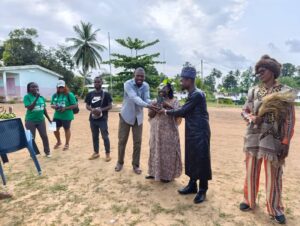
Impressed by the turnout and organization, the Deputy DO even floated a proposal to further boost the initiative. He suggested that future editions of the fair could make use of the modern market space constructed by the Campo Council, offering better infrastructure and greater reach.
Running simultaneously with the mini trade fair was a Photovoice project that provided community members, especially women and youth, with a platform to visually document and narrate their lived realities.
Through photographs and personal testimonies, participants highlighted their challenges, responses, and aspirations related to agriculture, climate change, and livelihoods in Campo, reinforcing the powerful human stories behind the produce on display.
Challenges remain, resolve grows stronger
Despite the success, the women of Campo are clear-eyed about the challenges they face. Lack of seeds, the effects of climate change, and persistent human-wildlife conflicts continue to threaten their livelihoods.
“These are obstacles we face on a daily basis,” AFRiSC Campo president acknowledged.
Yet, the mini fair itself stands as proof that training, solidarity, and innovation can turn adversity into opportunity. As the years pass, the women see the event not just as a marketplace, but as a tool to ensure food security for Campo and beyond.
With confidence and conviction, they are now calling on others to join the movement, men, youth, partners, and institutions alike.
For the women of AFRiSC Campo, the message is clear: against all odds, they are ready to cultivate hope, harvest resilience, and feed their community, today and for generations to come.


 Story Louvier Kindo Tombe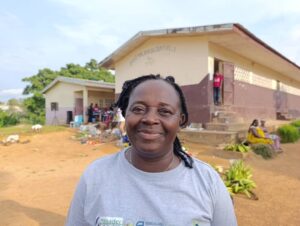
 Unlike previous editions, this year’s mini fair was organized entirely by the women of AFRiSC Campo, a local women’s association that has grown steadily over the years.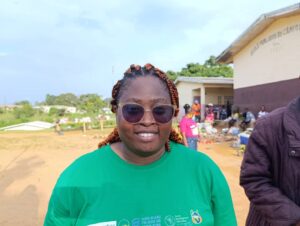
 At the official opening, the women used the platform to reaffirm their commitment to agriculture, echoing the national vision that encourages youth and women to engage in productive farming.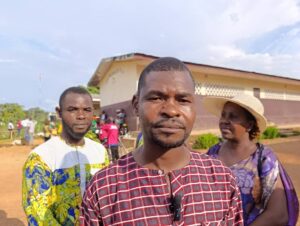
 Innovation, inclusion, and growing impact
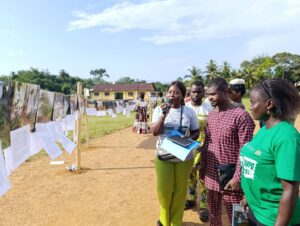 Through photographs and personal testimonies, participants highlighted their challenges, responses, and aspirations related to agriculture, climate change, and livelihoods in Campo, reinforcing the powerful human stories behind the produce on display.