Story, Louvier Kindo Tombe
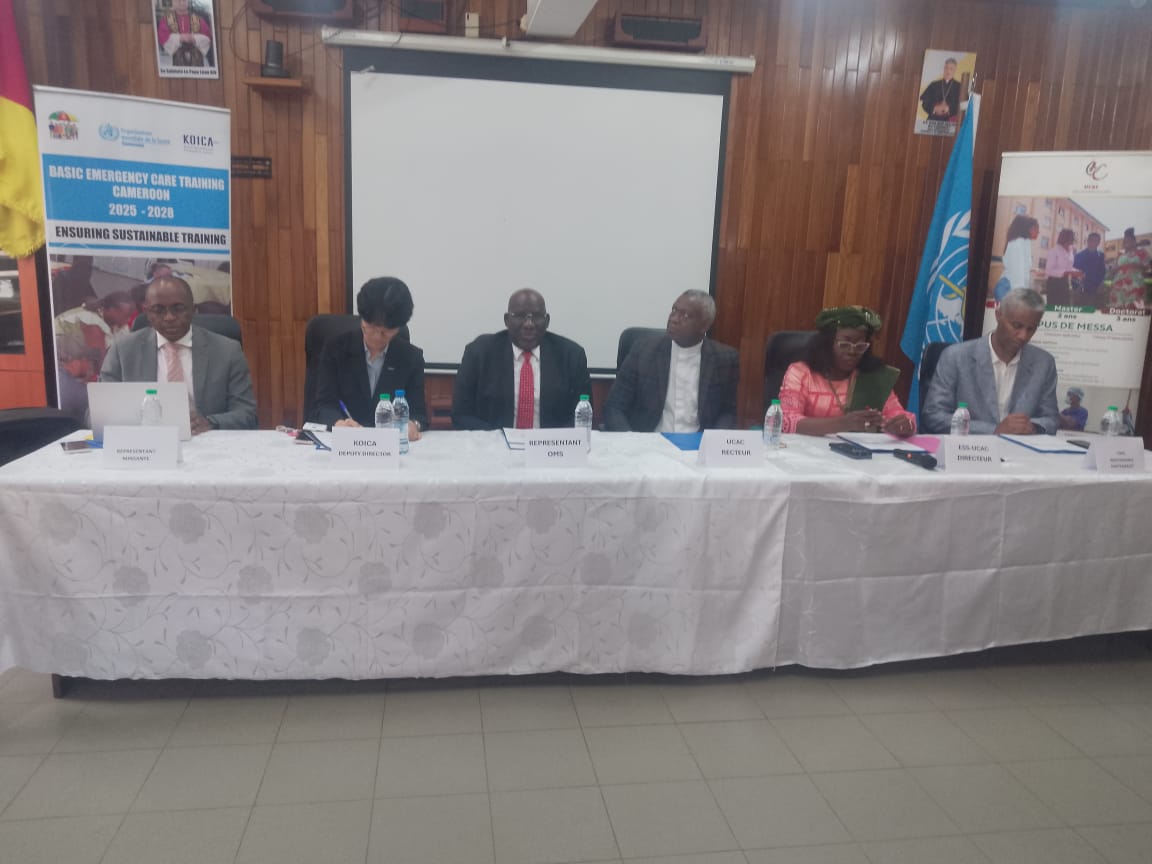
Lasting health improvements often start with a signature, but their true impact lies in the action that follows. A major milestone was recently reached in Cameroon’s healthcare landscape through the official signing of a Memorandum of Understanding between the World Health Organization and the Higher Institute of Health Sciences of the Catholic University of Central Africa (ESS-UCAC).
Supported by strategic partners like KOICA and the Ministry of Public Health, this landmark partnership aims to institutionalize vital WHO emergency health care training directly within the university’s academic framework.
Opening the floor during the ceremony, stakeholders underscored a striking reality: half of all deaths in low-income countries could be prevented with a quality emergency healthcare system. Yet, pressing challenges continue to plague the sector, including poor health infrastructure, frequent ruptures in medical supplies, and a shortage of sufficiently trained personnel.
With non-communicable diseases and trauma standing as leading causes of death in Cameroon according to recent reports from the Ministry of Public Health, rapid and high-quality emergency intervention has never been more indispensable.
To tackle these hurdles, the new framework focuses on three pillars covering community engagement, hospital infrastructure, and clinical services. As part of this initiative, the WHO has introduced two continuous training curricula alongside standardized evaluation tools for medical professionals.
Key leaders at the ceremony emphasized that medical excellence goes far beyond textbooks, requiring practical competence and shared responsibility.
WHO Representative Dr. Magaran Monzon Bagayoko highlighted that emergency services are an essential pillar of healthcare, noting that hospitals frequently lack the trained personnel needed to make life-saving, split-second decisions.
Echoing this sentiment, Dr. Sylvie Myriam Ambomo épse Mvoa of ESS-UCAC remarked that a patient’s first medical response can either heal or worsen their condition, describing the agreement as a vital step into an era of shared responsibilities focused on basic emergency care and community first aid.
The UCAC Rector further praised the university’s strong history of collaboration with UN agencies, welcoming the MoU as a firm commitment to understanding patient needs and elevating emergency care standards.
Hyesun Na, Deputy Country Director of KOICA Cameroon, added that the ultimate goal is to build resilient health systems and extend emergency management deep into local communities.
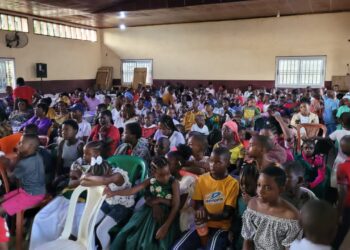
Demonstrating true proactive leadership, ESS-UCAC did not wait for the ink to dry before taking action. Although the initial target was to train 60 people prior to the formalization of the partnership, the institution successfully trained 100 individuals, comprising medical personnel, students, partners, and community first aid providers.
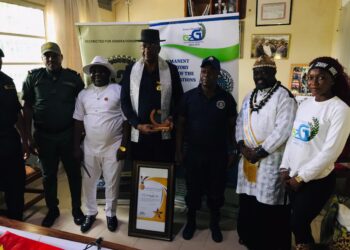
The ceremony concluded with the official handover of specialized training and medical materials to ESS-UCAC, ensuring that students and local medics are fully equipped to save lives on the ground and drive medical emergencies promotion forward.