Story, Louvier Kindo Tombe
Imagine a giant marketplace that connects over one billion potential customers across fifty-four nations. That is the central vision behind the African Continental Free Trade Area. The ultimate goal is straight forward: make selling goods to a neighboring country as easy and affordable as selling them down the street.
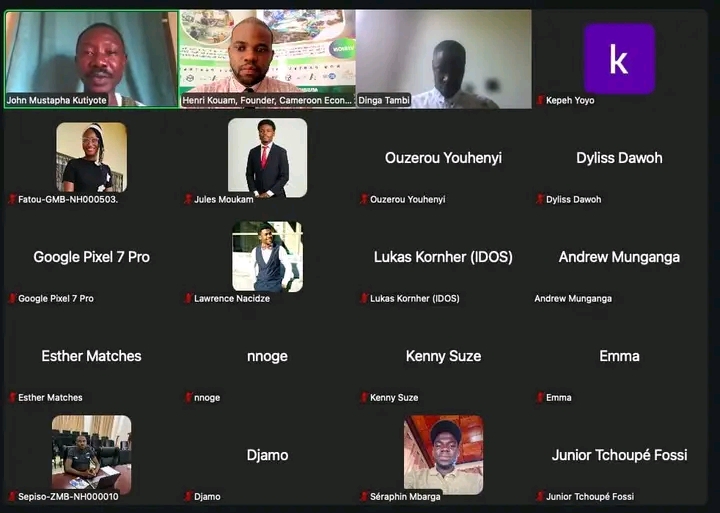
During a recent online discussion hosted by the Cameroon Economic Policy Institute and moderated by Executive Director Henri Koum, trade experts gathered to assess how this massive economic project is actually playing out on the ground. The conversation revealed that while the destination is shared, member nations are traveling at drastically different speeds.
Cameroon: Testing the Waters
Cameroon stepped up as one of the earliest adopters of the agreement. After officially signing on, the nation was selected as a real-world testing ground to see how businesses could trade under the new continental rules.
Since taking on that role, Cameroonian entrepreneurs have actively started shipping local goods like tea and dried fruits directly to buyers in Ghana. This practical test proves that the trade agreement is moving off the page and into the real world. However, early shipments also exposed everyday friction at the border, where customs officials often struggle with new clearance procedures. Changing laws on paper is relatively quick, but updating physical border operations takes time.
Zambia: Preparing the Supply Chain
Zambia took a deliberate and highly organized approach to the agreement. Rather than rushing straight into trading, the government spent time updating domestic laws, improving veterinary standards, and preparing its local agricultural industry to meet international demand.
That preparation paid off directly for local producers. Zambia successfully launched major commercial beef shipments across its border into the neighboring Democratic Republic of Congo. By getting its domestic policies in order first, Zambia connected its cattle farmers straight into higher-value regional markets, bringing in foreign earnings and building its reputation as a regional food supplier.
South Sudan: Proceeding with Caution
South Sudan presents a starkly different story. While the nation signed the initial agreement several years ago, it has deliberately held off on fully bringing the trade laws into effect.
Local leaders and economic experts express genuine concern over opening their borders too quickly. Because South Sudan is a young country with developing local industries, policymakers worry that stronger, fully industrialized neighboring economies could flood their market with cheap imported goods. South Sudan is choosing to wait until its domestic businesses are strong enough to handle foreign competition before fully opening its gates.
The Hidden Bottlenecks to Daily Trade
Removing taxes on imports is only the first step toward genuine unity. The panel emphasized that several major everyday hurdles continue to drive up the cost of doing business across the continent.
Bad roads and slow border crossings add severe delays, causing perishable food to spoil and driving up final prices for regular shoppers. Furthermore, most African businesses still convert their money into US Dollars to complete cross-border payments, which adds exchange fees and exposes traders to global currency shortages. Finally, complicated paperwork keeps many small traders, women, and young entrepreneurs stuck in informal markets where they cannot access loans or legal protections.
The Strategic Path Forward
To make the single market truly work, experts at the event outlined a clear strategy for the continent moving forward.
First, countries should stop trying to produce every product locally and instead invest strictly in their natural economic strengths. Governments must also actively educate small business owners on trade rules so local companies know how to take advantage of new incentives. Finally, digitizing border operations and sharing trade data between nations will eliminate long delays and build a truly connected African economy.