 Story, Louvier Kindo Tombe
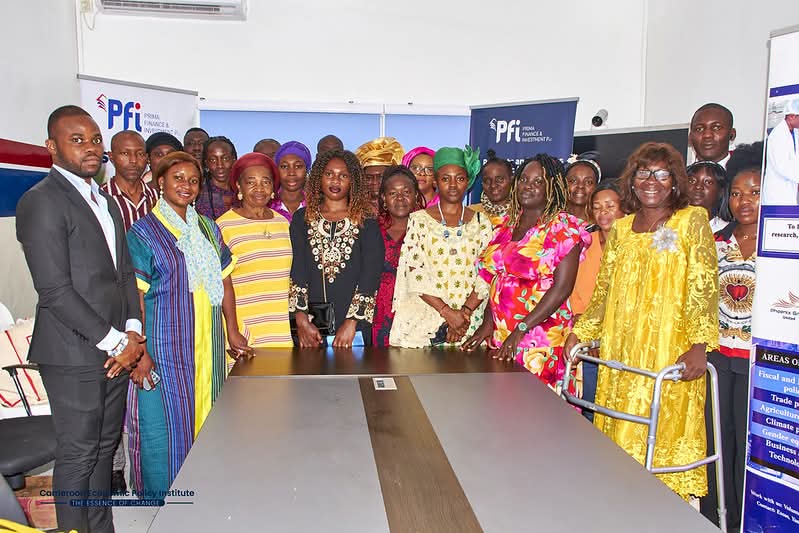
In a bold step toward transforming local businesses into continental players, the Cameroon Economic Policy Institute (CEPI), under the Henri Kouam Foundation, has equipped 21 Cameroonian entrepreneurs with practical tools to tap into Africa’s single market.
Held at Prima Finance and Investment plc in Biyem-Assi, Yaoundé, the high-impact workshop focused on trade finance and the operational tools of the African Continental Free Trade Area (AfCFTA) — the world’s largest free trade area by number of countries.
From Local Hustle to Continental Vision
For many participants, the training was more than a workshop — it was a mindset shift.
For years, the AfCFTA has sounded like a policy reserved for multinational corporations. But CEPI’s hands-on session broke down complex trade rules into clear, actionable steps for small and medium-sized enterprises.
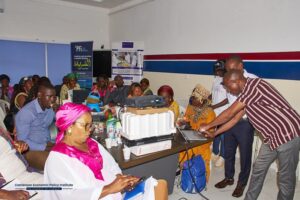
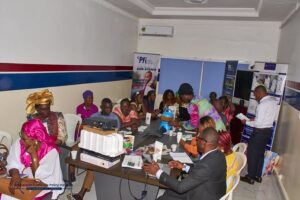
Through live demonstrations, entrepreneurs learned how to navigate the African Trade Observatory and Collaboratory tools — from identifying export-ready markets to understanding rules of origin, certification requirements, logistics channels, and financing opportunities.
Mr. Henri Kouam, Founder and Executive Director of CEPI, set the tone early, emphasizing punctuality, professionalism, and practical knowledge. He demonstrated how entrepreneurs can search for product-specific export regulations, locate trade support agencies, and identify high-potential markets across Africa.
Practical. Digital. Transformative.
The workshop moved beyond theory.
Three entrepreneurs showcased real-time applications using their own products — cocoa snacks, granola, and tea — demonstrating how digital trade tools can match them with markets and partners beyond Cameroon’s borders.
For Bidoua Bela Bernadette, an infusion manufacturer from rural Cameroon, the experience was eye-opening:
“For so long, we’ve heard about the AfCFTA, but it felt like something for big companies. This training changed that. It broke everything down into clear, manageable steps.”
Melingui Ambani Gisele, founder of Pesoja Biscuits, echoed the urgency for more such initiatives:
“This was the first time I received specific training on how to use AfCFTA tools to reduce costs and reach markets faster. There’s a real gap in capacity building for regional trade.”
Filling a Critical Gap
 In a business environment where most training focuses on domestic survival strategies, CEPI’s approach targets continental expansion — positioning Cameroonian entrepreneurs to compete regionally.
The initiative forms part of CEPI’s broader “Trade for You” program, designed to nurture a new generation of export-ready African business leaders.
Participants also called for: Monthly capacity-building sessions, simplified online access to export procedures, and better publication of trade guidelines by relevant ministries
Why This Matters Now
As Cameroon pushes for structural economic transformation, empowering SMEs to leverage the AfCFTA could unlock new revenue streams, reduce dependency on traditional markets, and strengthen intra-African trade.
If sustained and scaled, initiatives like this could redefine how small businesses in Yaoundé, Douala, and rural regions view their potential — not just as local producers, but as continental competitors.