 Story, Louvier Kindo Tombe
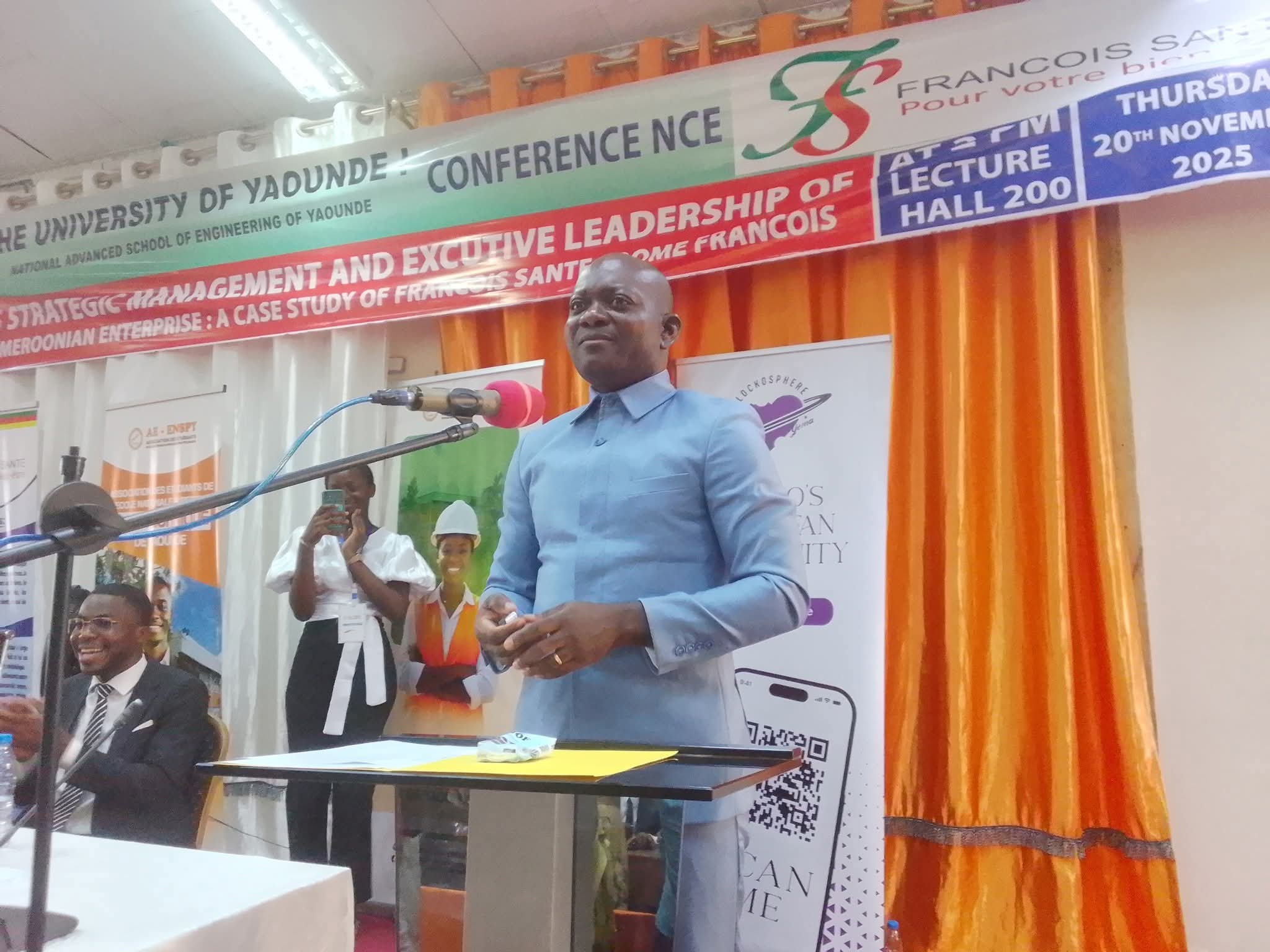
The amphitheatre buzzed with expectation, until a quiet figure walked in. It was François Désiré Ekouma Ananga, founder of François Santé. No theatrics, no corporate entourage. Just a man who had built his path from modest beginnings and had come to deliver more than inspiration — he had come with a challenge.
He started firmly, cutting through the hall’s noise.
“Don’t be noise-maker engineers. Commit to resolve a situation.”
The effect was immediate. Conversations stopped. Pens rose. What began as a talk transformed into a moment of reckoning.
François unfolded his journey with disarming simplicity. Nothing in his story was glamorous — only persistence, family support, and the audacity to keep moving when every step felt uncertain.
To the students, many waiting for the “perfect moment” to start something of their own, he offered a gentle but unshakeable truth:
“It’s good to start from somewhere.”
Then his tone sharpened. He was no longer narrating his past — he was shaping theirs.
“I’m here today to tell you to set to action now,” he said, scanning the room as if speaking to each student individually.
“Creators of jobs, not job seekers.”
The applause that followed wasn’t polite; it carried hunger, resolve, and discovery.
From the front row, the President of the Student Union — the driving force behind the conference — watched with pride. This was exactly the intervention he hoped would ignite the school’s entrepreneurial spirit. He later confessed that François’ words captured “the missing link” students had been yearning for.
François did not pretend the road was smooth. His honesty became a lesson on its own.
“Be courageous to venture,” he urged. “Know that the journey will be tough but fruitful.”

Then came the line that seemed to settle like a seed in every heart present: “I believe in you. I believe that you can — and you can do better.”
The amphitheatre fell silent, not out of awe, but out of recognition. For many, this was the first time someone in his position had spoken belief into their potential.
He closed with a reminder that engineering is not merely a discipline of theories and equations, but one of responsibility and resilience.
“In difficult moments, you should be able to find solutions.”
By the time the session ended, the energy in the hall had shifted. Students who entered the room as spectators left as participants in their own future — scribbling ideas, exchanging contacts, speaking with urgency and conviction.
And somewhere among them, perhaps, stands the next courageous creator — ready not to wait for perfect conditions, but to begin, to venture, to solve, and to rise.