Days after President Paul Biya was sworn in for another term, scepticism still lingers across Cameroon. Amid deep political divisions and doubts about the October 12 presidential election, more than 300 civil society organisations are calling for a fresh start — one they describe as a “national rebuilding process.”
In a joint declaration issued in Yaoundé, the organisations warn that rising social tension and mistrust threaten the nation’s cohesion. They urge political actors and citizens alike to move beyond confrontation and open a broad dialogue to restore confidence in public institutions.
Cameroon at a Crossroads
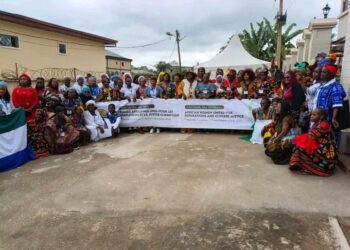
The statement, endorsed by over three hundred associations from across the country, calls for the urgent convening of a National Forum for Rebuilding the Country. The forum, they say, should promote reconciliation, justice, and a consensual transition toward lasting peace and democratic renewal.
“Cameroon is at a crossroads,” the declaration reads. “We must not allow this moment to deepen our divisions. It should instead serve as the foundation for rebuilding our nation on trust and solidarity.”
For Nancy Saiboh, President of Actions for Development and Empowerment (ADE) and one of the initiative’s leading voices, signing the declaration was an act of conscience.
“I signed because silence wasn’t an option,” she explained. “After the October 12 election, you could feel the tension, the mistrust, the fatigue of citizens. Joining this collective call was a way to say: we can disagree politically, but we must agree on keeping Cameroon together.”
Youth and Civil Society “Must Lower the Temperature”
The movement’s leaders, including Saiboh and Guy Constantin Nzati of Solidarité Jeunes (SoliJ), see their role not only as advocates for reform but as mediators between citizens and power.
“Youth and civil society can do two things right now,” Saiboh told our reporter.
“First, lower the temperature — promote dialogue, counter hate speech, remind everyone that political competition must not destroy social cohesion. Second, hold institutions to the standards they themselves proclaim: transparency, inclusion, accountability.”
She insists that civic vigilance is even more crucial after the swearing-in ceremony.
“After the President is sworn in, the temptation is to say ‘it’s over.’ It’s not,” she added. “That’s actually when citizens’ monitoring, civic education, and mediation work become even more important.”
What a National Forum Should Look Like
Civil society’s proposed National Forum for Rebuilding is envisioned as a space for genuine inclusion and reform. Saiboh believes that if such “General States for Rebuilding” are held, they must avoid the pitfalls of previous elite-led conferences.
“Inclusiveness must be non-negotiable,” she said. “Not only the usual actors in Yaoundé, but youth movements, women’s groups, people from conflict-affected areas, religious and traditional leaders — people must recognize themselves in the room.”
She also highlights the importance of truth and follow-up:
“We have to name the sources of mistrust — governance, electoral credibility, security, social injustice — and agree on mechanisms to fix them. And the outcomes must lead to visible reforms with clear timelines and responsibility. That’s how trust is rebuilt, slowly but solidly.”
A Turning Point for Civic Engagement
Observers see this mobilisation as part of a generational renewal within Cameroonian civil society, one that places dialogue and accountability at the heart of national recovery. While political actors remain divided over the election’s legitimacy, civil society’s message is unambiguous: peace built on repression cannot last.
As Nzati put it, “The Cameroon we want will not be born of violence or silence, but of the courageous commitment of all its sons and daughters.”
The coalition’s full declaration is available online, inviting organisations and citizens to join what it calls “a collective journey toward a New Cameroon.”